Two women on a narrowboat chugging down the canals of England doesn’t sound very adventurous. But you’ll see why it’s much more thrilling than you might have thought.
This article is a departure from my articles about real Amazing Women. It’s about three women in a work of fiction, The Narrowboat Summerby Anne Youngson.
Three amazing women populate this book. Eve is an executive, never married, who is summarily made redundant (laid off, in American English). Sally has left her uninteresting husband and grownup children to find a new life for herself. Both are, I think, in their mid-50s. And Anastasia is older (70s?) facing cancer treatments, who needs someone to mind her narrowboat, The Number One, for the summer.
After a bit of negotiation, Anastasia moves into Eve’s home, then she schools Eve and Sally on how to operate a narrowboat, including the tricky locks up and down the canal system of the western part of England.
Narrowboats in England
Narrowboats are a kind of canal boat used in the United Kingdom (Britain, Scotland, Wales). The canal and lock system in the UK started as a way to transport goods during the Industrial Revolution, but trucks, trains, and planes can get the goods around faster. Since the 1970s they have been used as full-time and part-time homes or rentals.
Yes, you can get an Airbnb narrowboat! The ad I saw said the boat had a double bed and sofa bed, a kitchen, bath with shower, a “pump out” toilet, with both a log stove and central heating. As Eve and Sally found, it’s probably not a good idea to run your electric appliances, mobile devices, and electric toothbrushes on the boat, because the power supply is batteries and they can run down pretty quickly.
There’s only so much space on a narrowboat. The maximum size is 7 feet wide and 72 feet long, which means there’s not a lot of room for what you and I might think we need on holiday. Anastasia vetoed a lot of the the unnecessaries Sally and Eve wanted to bring, like books, clothing, kitchen utensils, anything that could fly about or cause damage in turbulent water.
Life on a Narrowboat – Lots of Work!
As with life in general, there are times when you can just glide along with little to do but steer, keep to the middle and away from other boats, and enjoy the scenery. But then there are the locks, a major physical challenge. And what about fires? Falling overboard?
After reading about Eve and Sally’s difficult experiences working on The Number One, I was impressed with their ability to learn something new and become stronger physically. I watched this video guide from the Canal and River Trust, and I was even more impressed. (Yes, I know this is a work of fiction, but I identified strongly with Eve and Sally.)
The Story of The Narrowboat Summer
Eve and Sally set off, wondering if they can survive the summer both physically and emotionally. They never met before their meeting on a towpath, so they must maneuver gently to see if they will be compatible. They also meet others on their trip, including Tompette and Billy, young people who seem to be living a “hippie” style of life, complete with music and drugs. They also meet others along the way, including and a vaguely mysterious man with some connection to Anastasia. And they find themselves helping Anastasia as she goes through her chemotherapy sessions.
And all the time they are learning the ropes (literally), dangers, and beauties of the narrowboat and the world on the shore.
“The joy of moving all the time, so slowly and without physical effort – leaving aside the locks – is that there is endless time for the mind to wander.”
As Sally said, “…any stretch of countryside with a canal running through it was transformed into a frame of tranquility.”
They were both trying to figure out what they would do in the next phase of their lives in this “gap year.” They read a book called Mr. Luckton’s Freedom, about a man who escapes his life for many years and finally comes back. His story becomes a metaphor for their journey, and their experiences during this summer helped them make the next step in their lives at the end of the summer.
“It was good to leave, but there is pleasure in going back.”
But can you really go back? Every experience, every interaction with others changes you in some way, and you become a different person at the end of the experience.
I thoroughly enjoyed the book and would recommend it to anyone who may have a turning point decision in life and considering whether to “feel the fear and do it anyway,” stretching the limits of the possible. I usually skim through fiction to get the plot basics, but I found myself engrossed in the details of their experience, slowing down to smile at the mild humor and linger over the language and the visual images.
More Information About Narrowboat Life
This article from the Inland Waterways Association has some pros and cons of narrowboat life. You may also find a guide to narrowboat living on Amazon. Of course, if you want to take a narrowboat holiday, check out Airbnb or one of the hiring agencies. I Googled “narrowboat holiday rentals uk” and found several. Of course, if you are really daring, try a self-drive narrowboat vacation.
In the meantime, I think you’ll find The Narrowboat Summer enjoyable and thought-provoking. (Note: You may also find it under the title Three Women and a Boat.)
Agatha Christie Unknown author [Public domain], via Wikimedia CommonsI love books and my favorite books are mysteries. I’ve been reading them, buying them, collecting them, and dragging them home from the library since I was very young. Among the first mysteries I read were the Agatha Christie books. At one point, I had almost all of them; right now I have most but some have become lost in my many moves.
A conversation with another mystery novel reader prompted me to construct this list of my favorite mystery writers and novels. I’d be interested in your thoughts about my list, and if you have any to add, I’d love to hear about them. I’m always looking for new mysteries to read!
I tend to British detective novels, sometimes called “procedurals” because they focus on solving a crime. This list doesn’t include suspense or psychological novels, although some mystery writers (Ruth Rendell is the best example) also write suspense novels.
If I find a mystery writer I like, I hope for series. Then I begin with the first in the series. Many mystery series have a plot thread, usually about the main character and relationships, and it helps to start from the beginning.
Some of the books have police or private detectives who are “brooding,” that is, sad, morose, some suicidal. The worst are the Scandinavians (esp. the Wallander books of Henning Mankell). I get tired of morose detectives, would rather just have them solve the crime.
Here’s my list:
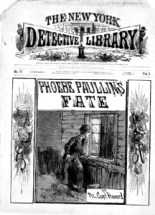
New York Detective Library 77 (Public Domain) wikicommons
Best Classic Mystery Writers
Agatha Christie. Of course. I’ve read all her books, some many times. I like Poirot the best, then Jane Marple. I’m not as fond of Tommy and Tuppence some of her standalone suspense novels like Pale Horse.
Sherlock Holmes. What can I say? Great books, short stories. Holmes was so popular that the public was infuriated when Conan Doyle killed him off, so he had to bring him back.
Josephine Tey. Josephine Tey isn’t as widely known but her Inspector Grant books are great. My favorite is Daughter of Time when Grant is hospitalized and he works on solving the mystery of the Princes in the Tower.
Wilkie Collins‘ The Moonstone is a little dated, but it was the first great classic mystery/suspense. Worth a read.
Edgar Allan Poe. I went through a Poe period when I was younger, and I got back to his mysteries occasionally. Poe set out all the conventions of mystery and detective fiction that authors still follow, including the introduction of August Dupin, detective. Try The Purloined Letter.
P.D. James, who died recently, wrote about a British detective named Adam Dalgliesh. Also try her novel The Children of Men, about a dystopian society (reminded me of Soylent Green).
Dorothy L. Sayers. Sayers is famous for the Lord Peter Wimsey series. These are dated, but I liked them anyway.
Ngaio Marsh. Her Inspector Roderick Alleyn mysteries often featured the theater crowd in London. They are a little dated but still good
Georges Simenon. Another classic author whose work is a little difficult to read. These Inspector Maigret mysteries are set in France.
Current Mystery Novels/Writers (in no particular order)
Michael Connelly. My top favorite mystery writer. His Harry Bosch mysteries are always good, about Harry Bosch, an L.A. detective, who is now retired. Some mysteries feature other characters like Harry’s half-brother Micky Haller (the “Lincoln Lawyer”). Always great stories.
Louise Penny writes about a fictional village in Quebec called Three Pines, and a Montreal homicide official named Armand Gamache. Quite a roster of quirky characters and a continuing plot line.
Colin Dexter. I LOVE the Inspector Morse mysteries. Yes, I know he’s brooding, but there is also humor in the stories and good plots. He’s a national hero in England, and you can get a Morse tour in Oxford. I heard that Queen Elizabeth came to a party where Dexter was and she asked, “Is Morse here?”!!
Rennie Airth. Airth’s books are another find a few years ago. They don’t make the NYT bestseller list, and they are few and far-between (only 5 to date), but they are great. The stories focus on a British detective a named John Madden after World War II. I read River of Darkness and I was hooked.
Martha Grimes. The titles of Grimes’ mysteries are the names of British pubs, like The Man With a Load of Mischief and The Old Fox Deceived. Richard Jury is the detective who solves mysteries with his friend Melrose Plant, a British aristocrat. Another group of quirky characters.
Nevada Barr. Anna Pigeon, the central character of Barr’s mysteries, is a forest ranger. The mysteries take place in interesting national parks and some dangerous places. Since her first mystery in 1993 at Guadalupe Mountains National Park, Anna has solved mysteries at 19 parks and counting.
Peter Robinson His DCI Banks series (British) has been going on for 30 years, and I have to confess that’s how long I’ve been reading them. Banks is a police detective, low on the “brooding” scale because he has a varied love life.
Ann Cleeves writes about the Shetland Islands, which really come alive in her stories. The “Shetland” series with Jimmy Perez and the detective Vera Stanhope mysteries are good. She also has several other series if you get done with these and want more.
Peter Grainger. I happened on to the DCI Smith series on Amazon. These books are only available on Kindle. Smith is quirky rather than brooding, and he’s endearing. I can’t wait for the next one.
Deborah Crombie‘s detectives are a pair – Duncan Kincaid and Gemma Jones. They start out working together on cases and end up in a relationship. Interesting, multi-dimensional plots that bring parts of England and London to life.
Frances Brody. A British writer you probably haven’t heard of who has a series of mysteries with private detective Kate Shackleton. These stories are set in the post-World War I era. If you like the Maisie Dobbs mysteries, you might like these.
Elizabeth George. Her mysteries feature Inspector Peter Lynley, a British peer, and his partner Barbara Havers, the exact opposite. Barbara is always in trouble for her dress and behavior, but she’s a brilliant detective. This write got off the track (in my opinion) for a while with some not-so-good books, but she’s back on with her last two.
William Kent Krueger. I found Krueger’s work in a bookstore in Minnesota. He writes about Minnesota in his Sheriff Cork O’Connor series, which feature interactions with local Indian tribes and have some beautiful settings. Also try his stand-alone novel Ordinary Grace; it’s excellent!
Val McDermid. She writes about Tony Hill, a criminal psychologist who works for the British police on assignments. A Place of Execution, a psychological thriller, is just about the best mystery I’ve ever read.
Laurie R. King. King re-visits Sherlock Holmes in his retirement as he meets and marries a young woman named Mary Russell. After their first few mysteries, they take off around the world.
Ian Rankin. The Inspector Rebus novels set in Scotland are a little dark and super-brooding, but I skip through those parts. In case you haven’t noticed, I read fiction in part because I want to experience the setting.
Caroline Graham. If you have ever watched Midsomer Murders, you’ll recognize the main character, Inspector Barnaby. Graham’s first book, The Killings at Badger’s Drift, started the series. Just good mysteries/puzzles. The TV shows are set in the beautiful Cotswolds in England.
Anthony Horowitz. He has picked up the styles of Agatha Christie (in Magpie Murders) and Sherlock Holmes (The House of Silk). Good writing.
Peter Lovesey is another British writer with a series about a detective. in this case, it’s Peter Diamond. Lovesey also has two other series: (1) A series set in the 1920s; the first is The False Inspector Dew, and (2) a series set in London in the 1870s featuring Sergeant Cribb. All are good. Check out especially Rough Cider, a standalone.
C.J. Sansom. I’m usually not fond of Medieval mysteries, but Sansom’s Matthew Shardlake Tudor mysteries (set in Medieval England) are interesting and avoid some of the more obvious anachronisms.
Ruth Rendell. Besides PD James, Rendell is probably the co-queen of British mysteries. She writes psychological thrillers but her best writing is in the Inspector Wexford series. Some of the psychological books are written under the name Barbara Vine. My favorite is A Dark-adapted Eye, a Barbara Vine novel.
Charles Finch writes about a Victorian gentleman named Charles Lenox who starts solving crimes in London to help friends. The later books in his series have Lenox setting up a detective bureau.
Peter May has several series of psychological thrillers and detective novels. His best series is the Lewis Trilogy, set on the Isle of Lewis off the coast of Scotland, featuring detective Fin Macleod. Lots of atmosphere here.
Mark Mills. I’ve included Mills in this list even though his books are more in the suspense/thriller category. Try The Information Officer, about a young lieutenant who solves a mystery on Malta during World War II. All his books are stand-alone.
Robert Goddard has been writing standalone mystery/suspense novels for 30 years, starting with Past Caring in 1986. (And, yes, I’ve been reading his books for almost that long). Each one is different and interesting. He also has a new series about a WWI former pilot named James Maxted. Some of his mysteries are set in England, others around the Continent – France, Spain, Italy, Germany.
Reginald Hill. Another quirky British cop series with Inspector Dalziel and his sidekick Peter Pascoe trying to solve mysteries in Yorkshire. They make for good reading. On Beulah Height is another of my top favorite mystery stories.
Christopher Fowler. Arthur Bryant and John May are a team of detectives in a special branch of the London police, called the Peculiar Crimes Unit, who solve unusual (peculiar) crimes. Good mix of characters and plots, many of which give a different view of London; one, for example, focused on the sewers of London. The latest, Hall of Mirrors, goes back to the beginnings of the pair, as they are in their 30s.
Jacqueline Winspear writes about the World War I era in England, with her character Maisie Dobbs at the center. Maisie is a private inquiry agent who solves mysteries for a price. A recent one, In This Grave Hour, involves Belgian refugees. The series has continued into World War II.
Charles Todd is actually a mother-son writing duo that has been working together since 1996. They have two series – the Ian Rutledge mysteries and Bess Crawford mysteries, set in England. Rutledge is a British police detective and WWI survivor with guilt that won’t let him go. The guilt takes the form of a voice in his head from a man he killed during the war. It takes a while to get used to that voice (MAX brooding), but the stories are good. Bess Crawford is a nurse during WWI and after who solves mysteries with the help of her family and a friend.
Jill McGown, who died in 2007, wrote about a detective pair – Inspector Lloyd and Judy Hill. She also wrote some standalone mysteries.
Sue Grafton. I was sad to read the Sue Grafton died in 2017. She wrote the Kinsey Millhone mysteries about a private detective in a fictional town in California. The first in the series was A is for Alibi. Grafton got all the way to Y is for Yesterday but never got to Z.
Alan Bradley‘s series is unique because the detective is a young girl named Flavia deLuce. She lives with her father and sisters in a falling-down house in a small English village in the 1950s. The plots and her part in them are sometimes unbelievable, but they are fun.
Henning Mankell. As I mentioned earlier, Mankell’s series character Kurt Wallander is the king of brooding. But the plots in his series set in Sweden are fascinating studies of human minds. Brutal crimes, like the one in Faceless Killers, are standard. Just so you know.
Chris Grabenstein. For a fun final series, there’s nothing to beat Chris Grabenstein’s John Ceepak mysteries. They are set in the 1950s in a beach town on the Jersey Shore. The stories are told by officer Danny Boyle, and the mysteries center on carnival rides like Tilt-a-Whirl, Fun House, and Mad Mouse. Bruce Springsteen lyrics are a favorite of John Ceepak, who is kind of a super-hero cop.
Mystery Novelists you won’t find on my list
Donna Leon Guido Brunetti mysteries. I find the corruption in the Italian criminal system disturbing.
Anne Perry Daniel Pitt and William Monk mysteries. Not as well written as some of the ones I mentioned.
Elly Griffiths’s books are too full of personal problems to make good mysteries.
Alexander McCall Smith. I couldn’t get into his Ladies’ Detective Agency novels.
Anything by James Patterson. Patterson has become an industry.
No mystery where a cat or a dog is involved.
Nothing like Silence of the Lambs (too creepy)
Robert B. Parker. The TV series of the Jesse Stone novels with Tom Selleck was better than the books.
James Runcie. I tried to read his Sydney Chambers mysteries after the series came out on Masterpiece. They are very dated. Stick to the PBS version.
_______________
If you enjoyed this post, you can sign up for my newsletter and read about women adventurers. You will receive my Timeline of Women Adventurers to see the ones I’ve published – and which are coming up – and get updates when I publish new articles.


 Jean Wilson Murray, writer