Ada Blackjack didn’t want to be a heroine; she just wanted to survive. But her courage and will to live is inspiring. 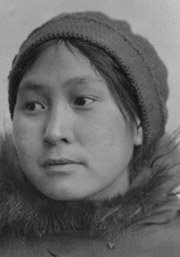 Why was she cast as a hero? She survived two years on a desolate Arctic island, three months of that time alone with the body of a dead man and only a cat for company.
Ada’s Story – Before Her Journey
Ada was born in 1898 in an Inuit (native Canadian/Arctic people) community near Nome. She went to school in Nome and she missed all the traditional Inuit skills like hunting, trapping, and building a shelter.
She married Jack Blackjack, a violent man who gave her three children, but who beat her and the children. He finally left, stranding her and her surviving son Bennett. At age 21 she walked 40 miles to Nome carrying Bennett, who had tuberculosis.
Ada couldn’t make enough money to care for Bennett, so she had to put him in an orphanage. Then in 1921, she was approached by an Arctic explorer named Vilhjalmur Stefansson to go on an Arctic expedition as a seamstress and cook, promising her $50 a month, when she returned. This was a huge amount of money in Ada’s eyes, and though she was initially reluctant, she finally agreed to go on the expedition, expecting there would be other Inuit on the trip.
The Journey to Wrangel Island
Stefansson was a character of the highest order. He lied about many things, he was a con man, he exaggerated his adventures, and he was always after the glory, with little concern for others (especially a poor Inuit woman). He portrayed the Arctic as “friendly” and “hospitable.” (The men who survived the disastrous 1913 Karluk expedition, when he abandoned them, would surely have disagreed.)
The expedition Stefansson had planned was to Wrangel Island in the Arctic Ocean, just north of Russia. His idea was to send some men to claim the island for Britain and the U.S. (They weren’t interested and Russia, which actually owned the island, protested.) He didn’t plan to go himself (of course!), but he selected four men and Ada. And a cat named Victoria went with them.
The only time ships could travel through the Arctic was in July, August, and early September; there was too much danger of becoming ice-bound any other times. The four men and Ada left on September 9, 1921, planning to be at the island until the next summer.
They stayed a year on the island waiting for a ship to come the next summer. During that time, Ada became homesick and lonely, even though the men were kind to her. She started behaving strangely, sometimes working diligently and other times being sullen and silent. She developed an attachment to the commander, Allan Crawford, mooning over him and begging him to protect her from the polar bears that terrified her. Several times she ran away, and she tried to commit suicide by drinking liniment (a pain reliever). The men finally had to threaten her to get her to stop her craziness and get back to work.
If you think she was crazy, consider that she was alone on an island with four men strangers, during the cold dark Arctic winter. She was young and had lived in civilization, never in the wilderness, she missed her son, and she had no skills for survival.
When summer came, no boat showed up to take them off the island. They were running out of food, and one of the men (Knight) had scurvy. The other three men decided to take off to find help; they were never heard from again.
After Knight died in June 1923, she built a barricade of boxes around his body to keep animals away from it. She did what she could to find and shoot food and to protect herself from polar bears. She used driftwood spikes to strengthen the walls of the tent and she built a gun rack over her bed to be ready in case of an attack. She trapped white foxes, age seagull eggs, and shot what game she could find. Finally, on August 19, 1923, almost two years from the time they left for Wrangel Island, a ship came to rescue her…and the cat.
After Ada’s Arctic Adventure
Immediately after their return, the media circus began. She was accused of killing Knight, and there were questions about how she could have survived. Stefansson tried to avoid paying her but he eventually gave her the money he owed. He and the rescue ship’s captain, Noice, tried to exploit her story. She avoided the craziness and took her son to Seattle to get a cure for his tuberculosis. She and the Knight family connected and she talked to them about his last days.


Ada died in a retirement home in 1983, at age 85.
Jennifer Niven has written a good biography of Ada, including information from the diaries of some of the men and from Ada’s own diary. Reading it made me angry at the connivings of Stefansson and the way Ada was treated.
Was Ada Blackjack an Adventurer? A Heroine?
 Although she was a reluctant traveler, she showed bravery by getting on the ship taking the explorers to Wrangel Island. She had no idea what would happen but she was willing to do it to help her son. Yes, she did have some problems on the island, but she settled down. She learned the skills she needed to survive, learning to shoot seals and other animals to survive. She built herself a shelf in the tent and slept with her rifle close, to protect herself from polar bears.
When she was left alone, she could have given up, but she didn’t. In her diary, she says, “I would never give up hope while I’m still alive.”
______________________________________
Sources:
- The book by Jennifer Niven I mentioned above
- An article in Atlas Obscura
Disclosure: The books featured in my posts have links to Amazon.com, and I receive money if you buy a book from one of these links.



 Dervla Murphy
 I loved this book! Dervla’s energy, her love of people, and her resiliency are contagious. She wasn’t afraid to meet people and make friends (although she did carry a pistol with her), staying with provincial governors and wealthy friends, but also the poorest of the poor, in their sometimes flea-ridden hovels, and once in a bed with several dirty children. She would eat the most ghastly, dirty, food with them. She started in January 1963 and traveled through Eastern Europe, Turkey, then Persia (Iran), Afghanistan, and Pakistan, ending up in Delhi, India in November.
 She traveled light, saying “the further you travel the less you find you need.” At one point, she was down to two pens, writing-paper, Blake’s poems (!), map, passport, nylon shirt,” with room for food.



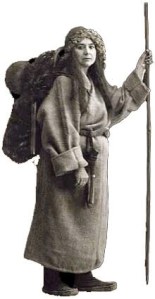 If you wanted Alexandra David-Neel to do something, all you had to do was tell her she couldn’t do it. At 5 years old, she ran away from home, scratched a policeman who tried to catch her, and showed no remorse when collected by her father. She was traveling alone in Europe at 17 and she lived independently from that time.
 While in Sikkim (near Tibet, now a part of India) she traveled in the Himalayas and studied with a hermit, sleeping in tents, cooking over a yak dung fire. She said she found that living a life reduced to the essentials pleased her. But she also had a servant with her on her trips, and she took a zinc bathtub everywhere, insisting on a hot bath every night. Oh, well, I guess we are all full of contradictions.
 She stayed for several years at a Buddhist monastery called
 If you enjoy travel and adventure, you won’t find much better than My Journey to Tibet. With typical self-promotion, she subtitled it The Classic Story of the Only Western Woman Who Succeeded in Entering the Forbidden City.
 She went back to China in 1937 when she was 69. When the Japanese threatened to invade, she escaped. Her husband Philippe died during this time; she had to wait until after the war to return.
 Sure, she was frightened. She came very close to death multiple times on her trek to Lhasa, from starvation, cold, or being executed for being in Lhasa. She suffered from depression and had many illnesses while she traveled. I read about many other times on her journeys when she could have given up and gone home, but her almost-obsessive need to keep moving, to travel, to live free, kept her going.
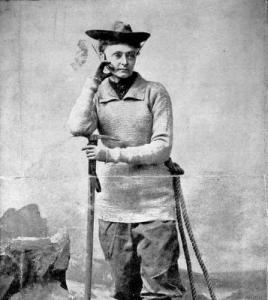 Many women adventurers had it said about them that “she should have been born a boy,” but probably no more so than Annie Smith Peck. Just look at her; she scandalized the socialites in Rhode Island with her climbing attire. Here she models her outfit: wool tunic, knickerbockers (those baggy trousers), puttees (basically support hose), and a felt hat tied with a veil, as she leans on an ice pick.
 Challenges of High Elevation Climbing

 When she returned, her achievements were disputed by other climbers. One of them, Fanny Bullock Workman (you will read about her in another post later) spent $13,000 refuting Annie’s claims. Annie commented that she could have used that money!


 I was so moved by

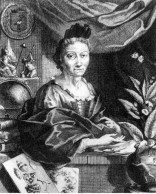 Women in the 1700s didn’t work, they weren’t scientists, and they didn’t travel alone. Maria Sibylla Merian broke through all these barriers, creating a career for herself by combining art and science in a whole new way. Her drive to know sent her (at age 52!) to South America to study in the rainforest. Her life would be extraordinary if she were living today, but it’s even more so in that world.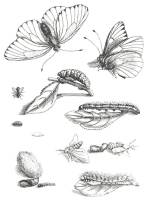

 After she returned from Surinam, she spent several years creating what I would consider her masterpiece, Metamorphosis insectorum Surinamensium (Metamorphosis of the Insects of Surinam). The version to the right is a facsimile, in German, and it’s $75.00. Maybe someday someone will publish an English version. I love the prints!
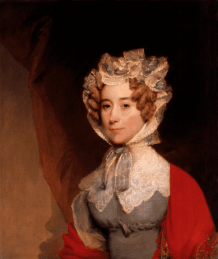


 The story of her journey is recounted in Mrs. Adams in Winter, by historian Michael O’Brien. So what happened? Well, just about everything you could imagine. The trip of about 2,000 miles would take about 40 days. They would stop at post stations where they would pick up a postilion (a man who would guide them to the next stop).
 The journey began on February 12, 1815, Louisa’s 40th birthday, as they left St. Petersburg in a carriage on runners and a kibitka (a large sled).
 Louisa didn’t write about her journey until many years later, in 1836, but it was included in her journals. These personal journals and letters have been turned into a book edited by Margaret Hogan and James Taylor, titled A Traveled First Lady.

 By French law, women were not allowed on naval ships, so Baret couldn’t travel as a woman. Glynis Ridley, the author of The Discovery of Jeanne Baret, believes they concocted the story of Baret as Commerson’s “assistant” so they could travel together. They carried this fiction on until she was discovered.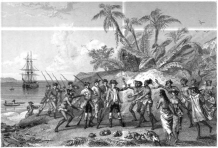

 Jean Wilson Murray, writer