Like many Jewish women in World War II, Rose fought for her life. Hers is a story of courage in the face of the threat of Auschwitz and death. Some of this is difficult to read but I wanted to share Rose’s story with you. She was truly a courageous adventurous woman.
Rose tells her own story in the book she wrote in 1983 called In the Mouth of the Wolf. Here are the highlights:
Fleeing the Ghetto – and the Extermination Camp
Rose Zar was born in 1922 and she was 19 and living in Piotrkow, a small town just outside Warsaw when the people there heard that the Nazis were rounding up Jews to be taken to extermination camps.
Rose’s father Herman Guterman, a smart man, realized that two of his children – Rose and her brother Benek – had a chance to get away and live hidden in plain sight. He said to them:
“If you’re ever on the run and have to hide, the best place is right in the mouth of the wolf.”
Rose and Benek didn’t look especially Jewish and they spoke Polish with no Jewish accent. They had also been taught enough about Catholicism that they could talk about it if necessary. Herman got them real Polish passports, changed their names to more Polish ones (she became Wanda Gajda) and added their photos. He told them not to stay together because one person could hide while two was too suspicious. So Rose was on her own – alone.
Benek found a job in another city and Rose found one in Warsaw in a leather shop making leather uppers for shoes. She said it was difficult because she had to listen to the anti-Semitic remarks by the shopkeeper and she had to watch them tear up copies of the Torah (the Jewish bible) for shoe linings. “It was hard wearing that mask,” she said in her book. “Very hard.”
This was only the first of many times she found it heartbreaking to be Jewish and not be able to react to anti-Jewish people. Finally, the repeated sexual advances by the shopkeeper forced her to leave.
Warsaw Ghetto. National Archives and Records Administration [Public domain]About this time she found out that her father was forced to go to the ghetto in Poland but his wife and six-year-old daughter were sent to the prison camp. I found this part difficult to read, but it might have been terrible for her to learn about.
Hiding in Plain Sight
For a while, Rose went from job to job and shelter to shelter, always trying to stay inconspicuous. She said, “The key to survival under false papers lies in making yourself as inconspicuous as possible.” She learned to keep her papers and some money sewn in a belt, so she could walk away from a situation if she felt it was dangerous.
Sometimes she had to leave a house quickly, with no place to stay. One Christmas Eve she was staying with an old man and woman. The woman decided Rose/Wanda had to go. Rose couldn’t be out after curfew so she found a little shelter behind a garbage can in the cold and snow. As she tried to sleep she heard Christmas bells and thought,
Peace on earth, goodwill toward men. But not for Jews.
She said she could never hear church bells the rest of her life without thinking of that moment.
One day she met a man she knew from her home town who was also a hidden Jew. She liked him and was eager for a Jewish friend, someone who remembered the town. But she was also concerned that he was too open. He kept coming to her work and his presence outside made her conspicuous. He also has some problems with Polish, saying some things with a Jewish accent. Something as small as that could mean being arrested and taken to a prison camp.
Rose wasn’t interested in him romantically. She had a boyfriend back in the ghetto and she knew she couldn’t afford the luxury of a love affair.
The Germans occasionally took her and interrogated her, trying to trick her into revealing herself One German sang Ave Maria to see if she could recognize it. (Luckily, she did.) She had several close calls and learned to trust her instincts. She had been receiving letters from her family and she didn’t want to throw them away. But one day she decided to clean them out. That night, walking home from work, she had a premonition that she shouldn’t go home. After taking a long way home, she learned that a Nazi had been looking for her and had left just before she arrived home.
Rose in the Mouth of the Wolf
Krakow, Poland, WWII. S. Frąckiewicz [Public domain]Finally Rose got what seemed like a dream job, as a housekeeper and companion to the wife of a Nazi colonel, the Kommandant in Krakow. She and the Kommandant’s wife became friends, and she took care of their baby when it was born.
She lived every day in fear of being found out, but she knew that she was probably safer in the home of a Nazi than just about anywhere else. The Colonel liked her and wanted her to marry a nice Nazi.
He was a cruel man, to his wife and to Rose/Wanda. Once, when his wife was away, he made her drink seven glasses of brandy; to the end of her life, she couldn’t stand the smell of it.
She would go to concerts with the colonel’s wife and sit with Nazi officers and their wives. She thought about sitting there with them not knowing she was Jewish. They couldn’t tell!
About this time, she read Gone With the Wind, Margaret Mitchell’s classic story of the fall of the culture of the South. It had a profound effect on her. She said that before she read it, she had thought that after the war everything would go back to the way it was and they would all live happily ever after. Now she realized she was fooling herself. The Pietrkow of her childhood was gone.
Never again would I walk those familiar streets…that world was gone forever….No matter what the future may bring, it will never bring back the past.
In 1944, the Germans were in retreat from Poland as the Russians advanced. The Colonel sent his wife and child away. When he was ready to leave for Germany, she hid from him, coming out only when she was sure the Germans had left.
Life After the War
If you talk to people who lived during this time in Europe, their lives seem to be divided strictly in terms of “before” and “after” the War. The people of Poland welcomed the Russians (formerly their enemies) as they took over Poland.
Rose went back to Piotrkow and married her childhood sweetheart. They helped smuggle Jewish children out of Soviet-occupied Poland and lived in Germany for a while. Finally, they went to the U.S. and spent the rest of their lives in South Bend, Indiana. You can read more about Rose’s work after the war in the “Overlooked” article about her in 2018 in the New York Times.
The Courage of Rose Zar
Courage comes in many forms. Rose Zar had a strong will to live and she spent over three years in constant danger, but she focused on survival. How exhausting it must have been for to have been always looking over her shoulder, wondering when she might be grabbed. Every word, every gesture, could bring her to the attention of the Nazis and a trip to Auschwitz, which was only an hour away from Krakow.
Was Rose Zar an Adventurous Woman? Well, her adventure wasn’t a choice. Like Ada Blackjack, she was forced into her adventure by circumstances. And she certainly had adventures. But her attitude toward her fate and the courageous way she fought to stay alive makes her, I believe, truly an woman adventurer.
Rose’s story is worth reading. It would make a great book club book.
_______________________
Disclosure: The books featured in my posts have links to Amazon.com, and I receive money if you buy a book from one of these links.
Sitting Bull. By Susanna Carolina Faesch, a.k.a. Caroline Weldon [CC BY-SA 4.0 (https://creativecommons.org/licenses/by-sa/4.0)%5D, via Wikimedia CommonsI’ve revisited the fascinating story of Caroline Weldon, the woman who traveled to Standing Rock to help Sitting Bull defend Lakota land. My expanded article explores what really happened, what Hollywood invented, and why Caroline’s actual life is more interesting than the movie.
Caroline Weldon was an Indian rights activist who decided she wanted to help the Sioux in their fight against the Indian Affairs people. She also wanted to paint Sitting Bull, the head of the Hunkpapa Sioux tribe and one of the most famous Native Americans of all time. Her story has been told in books and in a recent (2018) movie Woman Walks Ahead.
Movies and books often take artistic license by revising situations to suit narrative flow or other artistic interpretations. But this movie goes too far. A review on Rotten Tomatoes accused the movie of “grave historical inaccuracy.” Rolling Stone called the movie “one big falsehood” and says it “promotes a feminist agenda by painting over the pesky facts to make the story more palatable to lovers of romance novels.”
I was doing my research on Caroline Weldon when I came across the movie and I was appalled at the misrepresentation of her and of Sitting Bull. So I’m changing my usual narrative to contrast the “facts” with the movie version. I don’t want to stop you from enjoying the movie, just be aware that it’s far from historically accurate.
Why Caroline Weldon Came to the Dakotas
Caroline in 1915. Henry Sauerland, Mount Vernon, NY, USA [Public domain], via Wikimedia CommonsCaroline Weldon* was born Susanna Karoline Faesch in Switzerland in December 1844, which would make her about 45 at the time she was with Sitting Bull (not the beautiful 30-something portrayed in the movie.) Sitting Bill, chief of the Hunkpapa Lakota Sioux, would have been about 59 at his death in 1890 (not the virile 40-something of the movie). Yes, she was overdressed and she did, as the movie shows, tame down her wardrobe and hair after she came west..
Caroline was a widow with a young son, Christie (his existence is ignored in the movie). She was involved with a group called the National Indian Defense Association, who were protesting the break-up of the tribes. Her plan was to help Sitting Bull by being his secretary and translator and to paint his portrait.
A bit of background:
The U.S. government had been gradually taking over Native American lands. At first, they sent the tribes to reservations; the Five Nations owned about 21 million acres of land. The U.S. government believed the tribes would be “better off” if they had their own plots of land and farmed (the tribes didn’t want to farm). The Dawes Act of 1887 allowed the government to divide tribal land into allotments. The “excess” land would be sold to whites at market prices. (You can see where this is going.)
At the time Caroline was with Sitting Bull, government land agents were working hard to get the tribes (men, of course) to sign agreeing to the allotments. The situation was made more difficult by several things:
Gold had been discovered in the Dakotas. On Native American land.
The Indian rights people were trying to persuade the tribes not to sign.
The land agents were cutting food rations for the tribes, trying to force them into signing.
The U.S. Army still hated the tribes for Little Bighorn, where General Custer and his troops were all killed. Sitting Bull was blamed for leading the battle, but he actually wasn’t in the fight that day.
The final event that caused the government to become more aggressive was the emergence of a messianic cult that was inciting the Sioux and other tribes into a phenomenon called Ghost Dancing. The dances made the settlers and the Army nervous; they were afraid the tribes were getting ready to strike.
Back to the story…
Caroline made three trips to what was then called “Dakota,” to Ft. Yates and the Standing Rock Indian Reservation, where Sitting Bull lived. Her first visit was just for a few weeks, without her son. The second time, with Christie, she spent some time living with two women on a ranch 25 miles from Sitting Bull, and for a brief time moved to his home (but she stayed in a small house, not his cabin). The Sioux started calling her “Woman Who Walks Ahead” because she walked ahead of or with Sitting Bull, which a Native American woman would never have done.
Sitting Bull and Buffalo Bill. Henry Sauerland, Mount Vernon, NY, USA [Public domain], via Wikimedia CommonsShe was forced to leave by the Indian Agent, McLaughlin. He twisted her words and portrayed her in the press as insane. (Really.) The press didn’t like the idea of a woman acting out of character for that time. They castigated her for leaving her son in New York, and they reviled her for bringing him into danger in Dakota. She couldn’t win with them.
Major James McLaughlin is portrayed in the movie as a terrible man. He at first liked the Indians, as long as they were compliant. McLaughlin actually wrote a book called My Friend the Indian (1915)! He personally hated Sitting Bull, in part because of Little Big Horn. He liked to show off Sitting Bull, taking him on trips, including one to Washington, D.C. to “discuss” the Dawes Act.
McLaughlin told Sitting Bull what he could do and where he could go. In 1885 he allowed Sitting Bull to go to Buffalo Bill’s Wild West Show, where the chief rode in the opening parade for a few months.
What Happened in the End?
Caroline begged McLaughlin to be allowed to come back to Dakota a third time, with her son. She returned in October 1889, planning was to spend the rest of her life living with Sitting Bull and his people. She loved the prairie and the Sioux way of life, and she had nothing and no one back East.
She came back to a volatile situation, with the Ghost Dancers stirring up trouble and Sitting Bull sick and tired, looking years older. She accosted the messiah and denounced him, which didn’t go well with the tribes – and Sitting Bull. He sided with his people and turned his back on her. He said he was ready to die, and in fact, he predicted his own death.
One source quotes her as saying,
“There I had been working for his interest and the interest of the Indians for years, was ready to share all the dangers, and he was foolish enough to believe me to be his enemy.”
She was furious with him for not stopping the Ghost Dances because she was (rightly) afraid that their actions would lead to violence. But Sitting Bull, as chief, couldn’t and wouldn’t interfere with the right of his people to celebrate their religion.
She left with her son for Kansas City. Her son, who probably had tetanus, died on the way. Sadly, she was castigated by the press for “neglecting” him (she didn’t).
McLaughlin, convinced that Sitting Bull was “in open rebellion against constituted authority, was defying the Government,” decided to arrest him. Sitting Bull was arrested by the Army and some of his own people on December 15, dragged out his bed. He protested the indignity, and in the process, he was killed accidentally by One Bull, his adopted son. Caroline had already left for Kansas City and she was nowhere near Dakota when he died. (That dramatic movie scene where she runs around in the snow never happened.)
One incident that’s true – kind of – is the horse. The horse, a circus horse, was a present to Sitting Bull from Buffalo Bill. The rumors were that when the horse heard the gunshots in the fight, he followed his training and started dancing (the movie version). Another rumor was that he bowed his head. Who knows?
What Was the Relationship Between Caroline and Sitting Bull?
Caroline’s role with Sitting Bull was as a secretary, translator, and liaison. They were very different, culturally and personally, but they clearly liked each other. Were they romantically involved? There’s absolutely no evidence of that. Sitting Bull had 5 wives and more than one at a time. (No wives in evidence in the movie.) And she did paint several portraits of him, one of which was hanging in his cabin when he was killed.
There is evidence that he asked Caroline to marry him. She was insulted and refused. It’s quite possible that the proposal was a way of protecting her from rumors, but not because he “loved” her. That concept wouldn’t have been in his vocabulary. And the steamy scenes in the movie would never have happened.
The movie portrayed her as being instrumental in getting Sitting Bull to fight the allotments, but a Native American man probably wouldn’t listen to the advice of a woman.
He wanted peace, but he also wanted freedom. Tough dilemma.
Of her life in Dakota with Sitting Bull and the Sioux, she said (quoted in Woman Walking Ahead),
“No one in the world was as happy as I, and I wish that all might have shared in that happiness. A city seems a prison to me….I enjoyed the freedom of the wilderness…I love the solitude, …and I was loath to leave it. But I had to go, as my life was in danger.”
Caroline went back to New York and obscurity. Unlike other women of the time, she never published any memoirs. Maybe the memories were too difficult to bear. She died in 1921 and is buried in Brooklyn, N.Y, in Green-Wood Cemetery. In 2018, the cemetery featured her in a celebration for Women Who Walked Ahead.
Sources:
This NPR article interviews Michael Greyeyes, who plays Sitting Bull in the movie. He discusses the changes in the portrayals of indigenous people in tbe movie.
Willis Fletcher-Johnson. The True Story Behind “Woman Walks Ahead”- A Brief Historical Account of Caroline Weldon (part of a larger work). Johnson notes that Weldon didn’t begin using the name “Caroline” until after she left the reservation.
*Eileen Pollack. Woman Walking Ahead: In Search of Catherine Weldon and Sitting Bull. Bookbaby, 2018. Pollack, on the basis of Johnson’s book (above), chooses to use the name “Catherine.” Because she is included in Wikipedia as “Caroline,” I chose to use this name to make it easier for readers to find information about her.
Alexandrine Tinne By Robert Jefferson Bingham (RKDimages, Art-work number 157161.) [Public domain], via Wikimedia CommonsAlexandrina Petronella Francine Tinne in this image gives us a hint of her strong will. They say our character flaws are our strengths in excess. This was certainly true of Alexine, whose strong will may have been the cause of her downfall. Her various biographers differ on whether she was a true adventurer or just a wealthy woman traveling for pleasure. In this article, we’ll look at both sides of the controversy and how she met her fate.
Alexine was the only daughter of Henriette Tinne, part of the Belgian court and the second wife of an extremely wealthy man in Belgium. Born in 1835, Alexine was certainly spoiled. She had the run of her father’s library containing many geographies and travel books, and she got the travel bug. After her father’s death when she was 9 years old, Alexine and her mother traveled – a lot.
And they traveled in style. A typical trip included “mountains of luggage” and servants. Neither of these ladies was willing to give up any comfort to travel. By the time Alexine was 19, they had turned their eyes on Egypt and the Nile River.
Travels in Egypt and on the Nile
On their first trip to Egypt, they rode camels, with Henrietta (in her 60s) on a chair carried by two mules. They stayed with the Viceroy, put on plays, went to a society wedding, and met important people. Not much adventure here.
Dahabiyeh 1800s By Charles E. Wilbour (Brooklyn Museum) [No restrictions], via Wikimedia CommonsAlways looking for more worlds to conquer, Alexine set her heart on another trip down the Nile. She had met some explorers (Speke and Grant) who thought they had found the source of the Nile, and she wanted to find it too. So she and her mother set off up the Nile, with the hope of getting to Lake Victoria.
On her third – and last – voyage down the Nile in 1863, she overspent on everything because of her trusting nature and the rogues she had to deal with and also because she had to take EVERYTHING. She knew little about the country she was going to travel through, so she didn’t take much that she needed (like enough food and goods to barter with).
Just to give you an idea of the scope of the expedition, she and her mother each had a boat, there were 10 months worth of provisions, 200 people, including 65 soldiers, 4 camels, 30 donkeys, and 12,000 cowry shells for bartering. The first captain they hired put a hole one boat in Khartoum because he didn’t want to go on the White Nile.
As you can see, Alexine was determined that she and her mother would go in comfort. They rode on sedan chairs or on their boats, never walking. They also had personal maids and pets with them. They didn’t get up early, taking their time in the morning, so they would only travel in the afternoon when the sun was hottest.
On the White Nile in an area called the Suud, they were in the rainy season, and were plagued by mosquitos, dysentery, and scurvy. Alexine had to deal with stubborn porters, at one point having to threaten them at gunpoint. Shortly after that, she was stricken with fever and had to be carried on a stretcher.
I could go on and on about the terrible conditions, but I’ll cut to the end. Harriet and her maid died. Alexine finally gave up after that and struggled to get back to Khartoum (bringing the caskets back with her).
After the Nile – and Her Death
After the disastrous end to her last trip, Alexine retreated to Cairo, where she lived for several years, alone with her grief. But then she began making new plans. She had no intention of returning to Belgium, where nothing and no one waited for her except the condemnation of society.
Public Doman from Wikicommons
She traveled “alone” in the Sahara in 1869(with a large retinue, of course), planning to travel from Tripoli to Timbuktu. Still naive, she traveled with the Tuareg tribe of nomads (and no European protector).
On August 1, she was killed when her camp was raided. There are differing accounts of the motive, and her body was never found. She was immediately hailed as a heroine and called “the first white woman to attempt to cross the Sahara.”
Differing Opinions on Alexine
Other explorers at the time had mixed reviews of her. Samuel Baker said, “…They must be demented! A young lady alone with the Dinka tribe…they must be mad!” (Of course, Baker was angry that they had taken the only steamer on the river.)
Dr. David Livingstone, famous explorer, wrote a positive review of Alexine saying that no African explorer was higher than she because she faced “the severest domestic affliction” and “nobly persevered in the teeth of every difficulty.” His estimation was influential and it affected Europe’s views of Alexine as a great explorer.
In 1907 William Wells wrote a short biography of her for Sunday School children, saying that her journeys were “done solely out of love to the cause….of exploring Africa and carrying intelligence to the poor [natives], and doing what lay in her power to abolish …the infernal slave-trade.” Of course, Alexine was appalled at the slave trade and she did her best to free some slaves to set them free, but he exaggerates. In addition, he says that she “seemed to have no love for fashionable and courtly society.” Really!?
More recent work gives us another view. Robert Joost Willink, the author of The Fateful Journey, spares no sympathy for her, saying that their journey was “far from successful.” He says they had no idea what faced them, especially in the Sudd,, their trips were terribly planned – they brought all the wrong things and nothing of the right ones. She was demanding, stingy to von Heuglin (a scientist going with them), making him pay his own way. Willink said she was “no intrepid traveler.” She drifted along on the tide, and she seemed to “be propelled by events that were beyond her control.”
Thoughts on Alexine
Alexine Tinne was brought up in a certain way, with specific expectations of how life was going to be. You know the type – nothing bad ever happened to her and she thought she could snap her fingers and everyone and everything would bend to her will. And then she came upon Africa and the Nile. The culture and climate were completely different from anything she had ever experienced. Running over everyone and making the world comply with her demands just wasn’t going to work anymore.
Her naivety and dominating personality caused her to take on an impossible adventure and to travel the way she had always done, not realizing she was up against an even more dominating place. The overwhelming heat, the disease, the natives, the animals, the Sudd, all combined to conquer her. Her mother joined her willingly, and Henrietta was the one who dismissed the warnings of John Speke, but the maids had no choice. Did Alexine cause the death of these women? I believe so, but do believe it was impossible for her to turn away. Joost says that “the traumatic impact of the journey would bring a radical change in her experience of travel.”
In her last journey, Alexine shows some maturity and bravery. By going into the Sahara on her own, she was just beginning to become a true adventurer and to become truly brave. But she was also foolhardy. Old beliefs die hard; she never really grasped how vulnerable she was. I was sad to read of her death. I believe she could have gone on for many more years, adventuring through the Sahara and who knows where else. But we’ll never know…
The Fatal Journey, by Robert Joost Willink, focuses on the final voyage and takes a negative view of Alexine, portraying her as dominating, thoughtless, spoiled. It does include some nice images of artifacts Alexine and von Heuglin brought back.
_____________________________________
Disclosure: The books featured in my posts have links to Amazon.com, and I receive money if you buy a book from one of these links.
Isabella Bird Bishop was feminine, dressed in women’s clothes and rode side saddle (only in town). She also was an experienced traveler who wasn’t afraid of anything or anyplace. Miss Bird, as many called her, was a world traveler, but I have been especially interested in her travels in the Rockies in the 1870s, in part because it was here that she met her “dearest desperado,” who was the love of her life.
Isabella is probably the best-known woman adventurer, next to Gertrude Bell. I talk to people about the Women Adventurers series, they will often mention her. This article focuses on her trip to the Rockies in 1873, with a focus on her travels in the mountains and her relationship with Jim Nugent.
Isabella’s Early Life
Isabella Bird was born in Yorkshire, England, on October 15, 1891. Her father was a clergyman who had trouble keeping a position, so they moved often. From childhood, she was frail, with spinal issues, nervous headaches, and insomnia. Because of her illnesses, she was taught at home. A fibrous tumor was removed from her spine, but she still continued to have problems, and the family spent summers in Scotland to see if it would improve her health.
She was an outspoken child, bright, curious, and a great reader. Her father taught her botany and she enjoyed looking for specimens on her travels.
Isabelle’s first trip was a family trip to the U.S. in 1854, and her letters back home were the basis for her first book, An Englishwoman in America (1856). The book was well received and she was on her way to becoming a celebrity.
Off to the Rockies
In 1872 Isabella started a long journey. She found that travel invigorated her; she wasn’t prone to seasickness and she enjoyed much better health when she was traveling.
Fall River @ Estes Park. Ewing Galloway [Public domain], via Wikimedia CommonsThis trip began in Australia (which she disliked) and New Zealand (she liked it), and then she went to the U.S, with the aim of seeing the Rocky Mountains.
On her way to Estes Park, she stayed with two couples, and her time with them reveals the types of people who were living in Colorado in the 1870s. The first couple, the Chalmers family from Illinois, were “in all ways hard.” In A Lady’s Life in the Rocky Mountains, Isabella described their faces “like granite,” their meanness, suspicion and ill humor.
They were also “simply incompetent.” When Mr. Chalmers offered to lead her to Estes Park, she had clear evidence of this: On the way, their horses took off because he forgot to tether them. And he lost his way and couldn’t find the trail; he even forgot the way home! Isabella, of course, took charge.
She also stayed with the Hutchinsons, a “more agreeable” young doctor and his wife. They were from Britain and not used to the ways of rough citizens of Colorado. The settlers “shamelessly” cheated them and they had no farming or domestic skills. Isabella again took charge.
Isabella was at her best and healthiest when traveling, and she was “enchanted” with the mountains, with the brisk air and beautiful scenery.
Isabelle and Jim Nugent
Mountain man. Internet Archive Book Images [No restrictions], via Wikimedia CommonsWhen Isabelle reached Estes Park in 1873, she saw a “rude black log cabin” with a dog out front and “a broad thickset man, about middle height. He wore an old cap, a ragged hunting-suit, and mocassins on his feet. He had only one eye and “‘Desperado’ was written in large letters all over him.” * He actually kicked the dog as he raised his cap. This was Jim Nugent, “Rocky Mountain Jim, AKA “The Mountainous One” “because of the extraordinary altitude of his lies.”
But she was shocked when he began to speak, because, she said, his manner was that of a chivalrous gentleman, “easy and elegant” and cultured. “I hope you will allow me the pleasure of calling on you,” he said to her.
I wasn’t surprised to hear he was Irish, born in Canada; this was a complex man. He had run away from home because he couldn’t marry his first love. He had been a fur trapper and Indian scout (he was about 45) and he did trapping and guiding and stock raising to get money to spend on “orgies of drunkenness and ruffianism.” But he also wrote poetry and was vain about his reputation. He was gentle and children adored him.
He offered to guide her through Estes Park and a spark was quickly lit in their relationship as they traveled and talked. She said Jim was “cultured, erudite, delightful.”
Long’s Peak from Mont Alto CO, Library of Congress[Public domain], via Wikimedia CommonsThe description of their attempt to climb Long’s Peak (14,700 ft) was comical. Picture Isabelle, who described herself as a “short, plump, devout, high-minded English spinster of over forty…” (she was 45) in cumbersome Victorian dress and petticoats. She wanted to prove her bravery and courage by climbing the mountain, but her physical state wasn’t up to the challenge. She had to be “half-dragged” by Jim to the summit, as he tied her to himself and basically climbed with her on his shoulders. At times she crawled on her hands and feet.
Continental Divide / Bureau of Land Management [CC BY 2.0 (https://creativecommons.org/licenses/by/2.0) or Public domain], via Wikimedia CommonsToward the summit, the last 500 feet was a “perpendicular crawl up a smooth cracked face of pink granite.”
After this adventure, she stayed in a cabin (not the same one where Jim was) and enjoyed his company and that of his friends. She knew she was falling in love with him and didn’t know what to do. So she went on a trip to Denver and Colorado Springs and was able to find her way to the Continental Divide.
She was running out of money and came back to the cabin, where their relationship became more and more complex and “emotionally charged.” She knew, she said, that
“He is a man whom any woman might love but whom no sane woman would marry.”
Although she doesn’t come right out and say it, it appears that he declared his love for her and asked her to marry him. Finally, after a good deal of soul-searching, she wrote to him saying “there can be nothing but constraint between us…It is my wish that our acquaintance should at once terminate. Yours truly, ILB.”
Pat Barr, who recounts this story in A Curious Life for a Lady, suggests that Isabella had a strong sense of self-preservation and her Victorian upbringing wouldn’t let her tie herself permanently to the man she called her “dear ragamuffin desperado.”
She left Colorado to avoid being stuck there all winter. She found out about a year later that he had been killed in a fight.
Somebody should do a movie about this adventure. It reminds me of The African Queen, with Humphrey Bogart and Katherine Hepburn, only their story ended more happily. Just for fun sometime, try the original of The African Queen, the book by C.S. Forrester.
Isabella had more adventures in many countries and she did marry a Scottish gentleman who hated traveling. I’ll be writing more about her story in a future article.
Josefina (Joey) Guerrero was a true heroine and a woman of immense courage. Not only did she risk death by spying for the Americans in the Philippines during World War II, but she had to live much of her life as a leper. Her story doesn’t even rate an entry in Wikipedia, but it’s inspiring and she deserves the recognition she has begun to receive from a new book about her called The Leper Spy.
Joey’s Early Life in Manila
Joey Veluya was born in 1917 near Manila in the Philippines. She was super religious as a child and she idolized Joan of Arc, and her biographer Ben Montgomery says this “awoke in her a powerful defiance.” She was educated in a convent where she learned proper English. She loved everything beautiful, including art and poetry, but especially music.
When she was 16, in 1934, she met and married Renata Maria Guerrer0, the eldest son from one of the most distinguished families in the Philippines. Renata, 10 years older than Joey, was a doctor who played classical music. Two years later they had a daughter, Cynthia.
Then the headaches started, with fatigue, loss of appetite, and then a small blemish on Joey’s cheek. Renata took her to an infectious disease specialist. Montgomery says, “The diagnosis…fell out of his mouth like a stone. Leprosy.” This disease, now called Hansen’s Disease, was like a curse because most people believed it was highly contagious (it isn’t). In many societies, it was believed that leprosy was punishment for sin. Lepers in Manila were required to carry a bell and to announce themselves as “unclean.” When the pox became apparent they were sent off to leprosariums in the country. Joey’s husband and daughter moved in with his mother, and Joey was devastated.
Joey Guerrero the Spy
The Japanese took control of Manila in January 1942 and inflicted years of brutality and deprivation on the people. The Filipino population remained loyal to the Americans (they were at the time an American commonwealth). The rationing during the war limited her ability to get medicines, so her leprosy advanced.
At some point during the first years of the war, Joey decided she needed to help people, like Joan of Arc, so she volunteered for the resistance fighters. Her leprosy proved to be a benefit to spying because the Japanese would stay clear of her and look the other way.
She started by observing a Japanese garrison from her window, noting troop movements, soldiers coming and going. She even noted the condition of their uniforms (clean or soiled) to give information on what they might have been doing. After a while, she worked as a courier, delivering secret communications to resistance units.
At first, she would put messages in her hair, but one day she decided that might not be safe so she found another place on her body to hide messages. That same day, a Japanese sentry tugged on her hair and it came loose. Close call there. She tucked messages between two pairs of socks. If she was asked to remove her socks, she took off both pairs, with the message safe inside.
She walked miles to deliver messages, her face behind a veil. For a while, she had to stop working because her resistance leaders told her she was being sought by the Japanese.
Joey’s Last – and Most Dangerous – Spy Journey
The Americans landed in the Philippines in January 1945 and gradually began taking back the country. They were close to recapturing Manila but they needed to know about the location of Japanese mines so they could avoid them. Joey was asked to deliver a map to an American captain. She was told that the troops were located in Calumpit, about 35 miles from Manila. She agreed to make the delivery, taping the map between her shoulder blades.
No information was given to her about how to get to the troops, so she started walking. She still had headaches and fatigue but she felt she had to go; there was no one else. The Japanese were everywhere, guarding roads and paths and searching everyone. She reached the city of Malolo, about halfway, without much trouble from the Japanese, but she was warned about trouble ahead. Joey hired a banca (canoe) driver; they were chased by river pirates, but they managed to escape.
American troops in the Philippines [Public domain]Joey walked the last 8 1/2 miles to Calumpit, only to find out that the troops had moved to Malolo! She had to walk all the way back to deliver the map to the captain. When she got there, she was so exhausted she was not able to eat. When she told the captain what she had been through he said, “By God! I never dreamed the Filipino women had such courage!”
She was able to ride with the American troops as they raced to Manila to free the city. The Japanese were dug in, and it took many days to clear them out. During the battle, Joey cared for soldiers and civilians, praying for the dying and carrying children to safety. She worked until she was exhausted and suffered a hemorrhage to the lungs.
From One Leprosarium to Another
Carville Leprosarium, Louisiana. Leslie Seaton from Seattle, WA, USA [CC BY 2.0] via Wikimedia CommonsAfter the war, Joey went to a leprosarium outside Manila, where she stayed for three years. The conditions there were awful, with no sanitation or running water, so Joey, in her typical fashion, rolled up her sleeves, grabbed carbolic acid, and started cleaning up.
She started writing to groups in America and around the world to explain the plight of the leprosarium and ask for donations. By the time she left, the leprosarium had been cleaned up.
In May 1948 Joey received a Presidential Medal of Freedom from the U.S. and a medal from Cardinal Spellman for her “Christian fortitude and concern for fellow sufferers.”
Joey was offered the opportunity to go to the U.S., to the only public leprosarium in the country, at Carville, Louisiana, where she could get the best drugs and treatment. But there was a problem: no one with active leprosy had been able to get a visa to enter the U.S. Friends and supporters started a writing campaign and finally, in July 1948, she was able to fly to the U.S. and enter the Carville leprosarium. She was 30 years old, 5 ft tall and 100 pounds. She brought books and a record player to listen to music.
At Carville, Joey jumped right in as usual. She wrote articles for the colony’s newsletter, taught school, and studied. She received her high school diploma in 1953 and she hoped to go on to college through correspondence courses. But there was one problem: Her visa had expired and she was subject to deportation. She wanted to become a citizen but again her active leprosy was a barrier. It took many years of fighting and attempts by friends and her attorney to get a special Congressional action approved to allow her to get permanent resident status. With this, she could apply to be a citizen after three years.
During this time, she divorced from her husband. They had fallen out of contact and she hadn’t heard from him or her daughter in years. The divorce was final in December 1956. In January 1957, she married a fellow Carville resident, a Vietnamese man named Alex Lau.
They both were given permanent resident status and both received the status of “no clinical evidence of active leprosy.” This was in 1957, about 15 years after her first diagnosis. Finally, she was free to live her life.
Joey’s Later Life
Joey and her new husband moved to California, where she found work as a secretary. Alec’s leprosy came back, though, and he went back to Carville. She got a bachelor’s degree from San Francisco State and a Master’s degree in Spanish literature from Middlebury College in Vermont. She worked for four years as a Peace Corps volunteer (no surprise there!) and taught English and music.
In 1977 she moved to Washington, D.C., where she worked for many years as a clerk, and she lived in a small apartment full of books and music. She changed her name to Joey Leaumax and went to mass almost every day.
Johannes Brams [public domain]She volunteered as an usher at the Kennedy Center to be near her beloved music. Montgomery says she, “fed her soul on concerts for piano and violin.” Her favorite was Bhrams’ Symphony No. 1 in C minor, the second movement, “pregnant with unspoken yearnings.”
When she died in 1996 her friends found that there was no record of her life before about 1970. She had no information about previous acquaintances, had never told anyone about her leprosy, her daughter, or her life in the Philippines.
In a letter to a friend she said
“I have tried very hard to efface the past. I simply want to forget it! It was too traumatic and has given me no end of heartbreak.”
Thoughts…
On the one hand, you could look at Joey’s life and see sadness, heartbreak, and struggle. She certainly had a difficult life, dealing first with tuberculosis then leprosy, the loss of her daughter and husband, the war, and the situation of living in leprosariums.
On the other hand, Joey lived a life of service and a love of God. Reading about the numbers of people who helped and supported her in her effort to get her permanent resident status convinced me that she was loved and appreciated. In her last years, she surrounded herself with beauty, books, and music and she lived quietly and self-sufficiently.
Was she a hero? Absolutely!
Maybe that’s the best we can expect of life, taking the ups and the downs, trying to forget the difficult times and focusing on enjoying what we can of the present.
I was thrilled to learn about Joey Geurrera’s story and I hope you were too.
___________________
More about Hansen’s Disease
If you would like to know more about Hansen’s Disease, here are some sources:
Did you read about the young missionary who was killed by a remote tribe on an island in the Bay of Bengal? Against many warnings and official sanctions against his going, John Chau went to one of these islands and was shot with arrows on the beach as he landed. His story reminded me of Narcissa and Marcus Whitman, missionaries in Oregon territory in 1836 who tried to convert the Cayuse Indians. They, too, didn’t heed warnings and their fates were tragic.
Narcissa Whitman/ Mwanner at English Wikipedia [Public domain], via Wikimedia CommonsI’ve been reading about and studying the Whitmans for several years now. Their story fascinates me, but I’m not sure why. In this post, I’ll tell you about Narcissa’s bravery in traveling to the mission in Oregon territory and living there in what was wilderness. She and another missionary wife, Eliza Spaulding, were the first white women to travel across the country to the West.
Narcissa’s Early Life and Marriage
Narcissa Prentiss was born in March 1808 in Plattsville, New York, the oldest of nine children. The U.S. at the time was in the middle of what has been called the Second Great Awakening, a period of religious revivals and fervor. Her mother was over-the-top religious (Presbyterian), and the children were totally under her thumb. Narcissa was converted at age 11, and by age 15 she committed to becoming a missionary.
I can’t think of anyone who was less likely to succeed as a missionary than Narcissa Prentiss Whitman.
Marcus Whitman /Paul Kane [Public domain] wikicommonsYoung women of the time were rigidly controlled and Narcissa’s life was circumscribed by church activities. She had no contact with any other people of different cultural or racial backgrounds. She lived a cultivated and organized life, in “refined society.” She was an advocate of abstinence and the newly-formed women’s movement had no effect on her.
She was going to found a mission in Oregon, in what was then a foreign country, working with native Americans whose culture was totally different. But the mission movement needed married men, so Narcissa was paired with Marcus Whitman, a doctor and a missionary, and they were married in February 1836 after having met only a handful of times.
Narcissa’s Trip to Oregon Territory
In March 1836 they began their journey to the Walla Walla Valley in today’s eastern Oregon, along with Henry and Eliza Spaulding, also newlyweds, who were going to start a mission near the Whitmans. (Henry Spaulding had been a suitor of Narcissa, and she had refused his offer of marriage. He was not happy about going west with her and said, “I question her judgment.”)
They traveled down the Ohio River to the Mississippi and to St. Louis, leaving there in early April. The women could not ride horses side-saddle all the way to Oregon, and they were not allowed to ride astride, so wagons were waiting to take them on their journey. The first strange thing I saw that gave me a clue as to their rigidity was that the missionaries refused to travel on Sunday, even though they were traveling with fur traders and non-Christian guides.
Hunting buffalo [Public domain], via Wikimedia CommonsNarcissa was a good traveler, enjoying the scenery and not minding the early inconveniences. She was also getting used to being married (some honeymoon!). She was appalled when Marcus got rid of his best clothes, and she had to work to keep him “relatively clean.” (Strange to worry about that on the trail, but it gives a clue to her rigidity.)
Along the way, they met Indians, and Eliza was quick to spend time with them, learning their language and speaking with the women. Narcissa, although she seemed to like the women, spent little time with them and made no attempt to learn to speak with them.
After Ft. Hall in Idaho, the became more difficult, more rugged and mountainous. They had to give up the wagons, the women were forced to walk, the heat was oppressive, food became scarce, and they had to live on buffalo and occasionally small animals. Because Narcissa downplayed the rigors of the journey in her journals and letters home, it’s hard to say how difficult the journey.
The Whitmans Among the Cayuse Indians
When the Whitmans and Spauldings arrived in Oregon territory, Eliza immediately went with her husband to the mission because she was eager to start ministering to the Indians. Narcissa stayed behind at Ft. Vancouver for several months to enjoy the more civilized surroundings and, I suspect, put off the ineveitable meeting with the “savages” she was supposed to be ministering to. She was pregnant and she used that and she used her need to order home goods for her delay in moving. She criticized the religious practices of the Americans at the fort, believing apparently that only Presbyterians were possessed of the true religion.
Cayuse Indian (John Cutmouth) ca. 1865 / Unknown photographer [Public domain], via Wikimedia CommonsThe Cayuse Indians were semi-nomadic hunters and horsemen. They had little use for homes, spent much time on horseback, and they traded furs with the Hudson’s Bay Company. They were everything Narcissa abhorred – dirty, polygamous, alcohol drinkers, gamblers. The dark-skinned Indians painted their faces and lived communally.
She moved to her new home at Waiilatpu in December, but it took her several months before she went to visit the Cayuse. In her diary, she called this visit “a day spent…in heathen lands, widely separated from kindred souls, alone, in the thick darkness of heathenism.”
Trouble started when Narcissa refused them access to her home; she didn’t want the dirty heathen in her private space, while the Indians didn’t have any understanding of this concept; to them, everything was shared and no place was off limits. Troubles seemed to multiply, although both Whitmans didn’t see the danger. The church services were full of Marcus preaching of hellfire and damnation, which angered the Indians. In a documentary about the Whitmans produced by the Whitman Museum Historical Society, you can see several scenes where Marcus is preaching or leading singing and the Indians are looking confused and angry.
Whitman Mission, Waiilatpu / Samuel A. Clarke [Public domain], via Wikimedia CommonsJulie Roy Jeffery, the author of Converting the West, says the Whitmans confused faith and culture. The Indians were worried about the changes to their culture, but the Whitmans saw everything in terms of religion. The Whitmans saw the nomadic lifestyle of the Cayuse as a barrier to their conversion and wanted them to become farmers, settled and Christian. It was an essential difference that proved impossible to overcome.
In the 10 years the Whitmans were at the Waiilatpu mission they were not able to convert any Cayuse to Christianity. Not one.
In March, 1837, on her twenty-ninth birthday, Narcissa had a daughter, Alice Clarissa. Narcissa, as you can imagine, loved the child and was very protective of her, not letting the Indians get near her. ln a horrid accident, she was left on her own for a few minutes and she drowned in the Walla Walla River at age two. Any hope of something good to come out of this experience was ended with the child’s death, and Narcissa was never the same again.
The Tragic Outcome
All through the time of the mission, the Indians were at times angry with the Whitmans for a variety of problems, but by the end, two factors were the sparks that set off the smoldering blaze of their anger. The first spark was the increasing presence of many more settlers at the mission. During the last few years, the Whitmans took in settlers who would spend the winter and sometimes, like the orphaned Sager children, The Cayuse became more worried that the settlers would take over their land and push them out.
Grave at Whitman Mission / National Park Service [Public domain], via Wikimedia CommonsThe final spark was the diseases brought by the settlers. The measles was the worst of the diseases. Indian children died at higher rates than the whites because they had no natural immunity, having never been exposed to these illnesses before. Marcus Whitman doctored these Indian children, and the Cayuse became convinced he was killing them. It was common for Indians to kill a doctor when a patient died.
Marcus Whitman had been warned many times that their lives were in danger, but he chose to stay, not willing to admit defeat.
On the morning of November 29, 1847, several Indians entered the house and slaughtered Marcus and Narcissa and 11 others. They took 54 captives for a month, eventually trading them with the Hudson’s Bay Company.
The Cayuse who carried out the massacre were caught, tried, and hanged publicly.
Thoughts about Narcissa and Marcus Whitman
As I mentioned in the beginning, I have been fascinated by this story of courage, but also by its tragic outcome. The term “tragedy” has been overdone, but I’m talking about Tragedy in the classical Greek sense, “a play dealing with tragic events and having an unhappy ending, especially one concerning the downfall of the main character.” According to Aristotle, a tragedy should arouse both fear and pity from the audience.
Marcus Whitman was a tragic character, limited by his fatal character flaws from fulfilling his calling. He had an earnest desire to convert and heal, but he couldn’t do it. He was a doctor; he really didn’t have the “calling” required of a true missionary. Narcissa certainly elicits pity from those who hear her story. She was a tragic character, a prisoner of her upbringing and unable to change. That doesn’t make her any less brave and steadfast.
Agatha Christie Unknown author [Public domain], via Wikimedia CommonsI love books and my favorite books are mysteries. I’ve been reading them, buying them, collecting them, and dragging them home from the library since I was very young. Among the first mysteries I read were the Agatha Christie books. At one point, I had almost all of them; right now I have most but some have become lost in my many moves.
A conversation with another mystery novel reader prompted me to construct this list of my favorite mystery writers and novels. I’d be interested in your thoughts about my list, and if you have any to add, I’d love to hear about them. I’m always looking for new mysteries to read!
I tend to British detective novels, sometimes called “procedurals” because they focus on solving a crime. This list doesn’t include suspense or psychological novels, although some mystery writers (Ruth Rendell is the best example) also write suspense novels.
If I find a mystery writer I like, I hope for series. Then I begin with the first in the series. Many mystery series have a plot thread, usually about the main character and relationships, and it helps to start from the beginning.
Some of the books have police or private detectives who are “brooding,” that is, sad, morose, some suicidal. The worst are the Scandinavians (esp. the Wallander books of Henning Mankell). I get tired of morose detectives, would rather just have them solve the crime.
Here’s my list:
New York Detective Library 77 (Public Domain) wikicommons
Best Classic Mystery Writers
Agatha Christie. Of course. I’ve read all her books, some many times. I like Poirot the best, then Jane Marple. I’m not as fond of Tommy and Tuppence some of her standalone suspense novels like Pale Horse.
Sherlock Holmes. What can I say? Great books, short stories. Holmes was so popular that the public was infuriated when Conan Doyle killed him off, so he had to bring him back.
Josephine Tey. Josephine Tey isn’t as widely known but her Inspector Grant books are great. My favorite is Daughter of Time when Grant is hospitalized and he works on solving the mystery of the Princes in the Tower.
Wilkie Collins‘ The Moonstone is a little dated, but it was the first great classic mystery/suspense. Worth a read.
Edgar Allan Poe. I went through a Poe period when I was younger, and I got back to his mysteries occasionally. Poe set out all the conventions of mystery and detective fiction that authors still follow, including the introduction of August Dupin, detective. Try The Purloined Letter.
P.D. James, who died recently, wrote about a British detective named Adam Dalgliesh. Also try her novel The Children of Men, about a dystopian society (reminded me of Soylent Green).
Dorothy L. Sayers. Sayers is famous for the Lord Peter Wimsey series. These are dated, but I liked them anyway.
Ngaio Marsh. Her Inspector Roderick Alleyn mysteries often featured the theater crowd in London. They are a little dated but still good
Georges Simenon. Another classic author whose work is a little difficult to read. These Inspector Maigret mysteries are set in France.
Current Mystery Novels/Writers (in no particular order)
Michael Connelly. My top favorite mystery writer. His Harry Bosch mysteries are always good, about Harry Bosch, an L.A. detective, who is now retired. Some mysteries feature other characters like Harry’s half-brother Micky Haller (the “Lincoln Lawyer”). Always great stories.
Louise Penny writes about a fictional village in Quebec called Three Pines, and a Montreal homicide official named Armand Gamache. Quite a roster of quirky characters and a continuing plot line.
Colin Dexter. I LOVE the Inspector Morse mysteries. Yes, I know he’s brooding, but there is also humor in the stories and good plots. He’s a national hero in England, and you can get a Morse tour in Oxford. I heard that Queen Elizabeth came to a party where Dexter was and she asked, “Is Morse here?”!!
Rennie Airth. Airth’s books are another find a few years ago. They don’t make the NYT bestseller list, and they are few and far-between (only 5 to date), but they are great. The stories focus on a British detective a named John Madden after World War II. I read River of Darkness and I was hooked.
Martha Grimes. The titles of Grimes’ mysteries are the names of British pubs, like The Man With a Load of Mischief and The Old Fox Deceived. Richard Jury is the detective who solves mysteries with his friend Melrose Plant, a British aristocrat. Another group of quirky characters.
Nevada Barr. Anna Pigeon, the central character of Barr’s mysteries, is a forest ranger. The mysteries take place in interesting national parks and some dangerous places. Since her first mystery in 1993 at Guadalupe Mountains National Park, Anna has solved mysteries at 19 parks and counting.
Peter Robinson His DCI Banks series (British) has been going on for 30 years, and I have to confess that’s how long I’ve been reading them. Banks is a police detective, low on the “brooding” scale because he has a varied love life.
Ann Cleeves writes about the Shetland Islands, which really come alive in her stories. The “Shetland” series with Jimmy Perez and the detective Vera Stanhope mysteries are good. She also has several other series if you get done with these and want more.
Peter Grainger. I happened on to the DCI Smith series on Amazon. These books are only available on Kindle. Smith is quirky rather than brooding, and he’s endearing. I can’t wait for the next one.
Deborah Crombie‘s detectives are a pair – Duncan Kincaid and Gemma Jones. They start out working together on cases and end up in a relationship. Interesting, multi-dimensional plots that bring parts of England and London to life.
Frances Brody. A British writer you probably haven’t heard of who has a series of mysteries with private detective Kate Shackleton. These stories are set in the post-World War I era. If you like the Maisie Dobbs mysteries, you might like these.
Elizabeth George. Her mysteries feature Inspector Peter Lynley, a British peer, and his partner Barbara Havers, the exact opposite. Barbara is always in trouble for her dress and behavior, but she’s a brilliant detective. This write got off the track (in my opinion) for a while with some not-so-good books, but she’s back on with her last two.
William Kent Krueger. I found Krueger’s work in a bookstore in Minnesota. He writes about Minnesota in his Sheriff Cork O’Connor series, which feature interactions with local Indian tribes and have some beautiful settings. Also try his stand-alone novel Ordinary Grace; it’s excellent!
Val McDermid. She writes about Tony Hill, a criminal psychologist who works for the British police on assignments. A Place of Execution, a psychological thriller, is just about the best mystery I’ve ever read.
Laurie R. King. King re-visits Sherlock Holmes in his retirement as he meets and marries a young woman named Mary Russell. After their first few mysteries, they take off around the world.
Ian Rankin. The Inspector Rebus novels set in Scotland are a little dark and super-brooding, but I skip through those parts. In case you haven’t noticed, I read fiction in part because I want to experience the setting.
Caroline Graham. If you have ever watched Midsomer Murders, you’ll recognize the main character, Inspector Barnaby. Graham’s first book, The Killings at Badger’s Drift, started the series. Just good mysteries/puzzles. The TV shows are set in the beautiful Cotswolds in England.
Anthony Horowitz. He has picked up the styles of Agatha Christie (in Magpie Murders) and Sherlock Holmes (The House of Silk). Good writing.
Peter Lovesey is another British writer with a series about a detective. in this case, it’s Peter Diamond. Lovesey also has two other series: (1) A series set in the 1920s; the first is The False Inspector Dew, and (2) a series set in London in the 1870s featuring Sergeant Cribb. All are good. Check out especially Rough Cider, a standalone.
C.J. Sansom. I’m usually not fond of Medieval mysteries, but Sansom’s Matthew Shardlake Tudor mysteries (set in Medieval England) are interesting and avoid some of the more obvious anachronisms.
Ruth Rendell. Besides PD James, Rendell is probably the co-queen of British mysteries. She writes psychological thrillers but her best writing is in the Inspector Wexford series. Some of the psychological books are written under the name Barbara Vine. My favorite is A Dark-adapted Eye, a Barbara Vine novel.
Charles Finch writes about a Victorian gentleman named Charles Lenox who starts solving crimes in London to help friends. The later books in his series have Lenox setting up a detective bureau.
Peter May has several series of psychological thrillers and detective novels. His best series is the Lewis Trilogy, set on the Isle of Lewis off the coast of Scotland, featuring detective Fin Macleod. Lots of atmosphere here.
Mark Mills. I’ve included Mills in this list even though his books are more in the suspense/thriller category. Try The Information Officer, about a young lieutenant who solves a mystery on Malta during World War II. All his books are stand-alone.
Robert Goddard has been writing standalone mystery/suspense novels for 30 years, starting with Past Caring in 1986. (And, yes, I’ve been reading his books for almost that long). Each one is different and interesting. He also has a new series about a WWI former pilot named James Maxted. Some of his mysteries are set in England, others around the Continent – France, Spain, Italy, Germany.
Reginald Hill. Another quirky British cop series with Inspector Dalziel and his sidekick Peter Pascoe trying to solve mysteries in Yorkshire. They make for good reading. On Beulah Height is another of my top favorite mystery stories.
Christopher Fowler. Arthur Bryant and John May are a team of detectives in a special branch of the London police, called the Peculiar Crimes Unit, who solve unusual (peculiar) crimes. Good mix of characters and plots, many of which give a different view of London; one, for example, focused on the sewers of London. The latest, Hall of Mirrors, goes back to the beginnings of the pair, as they are in their 30s.
Jacqueline Winspear writes about the World War I era in England, with her character Maisie Dobbs at the center. Maisie is a private inquiry agent who solves mysteries for a price. A recent one, In This Grave Hour, involves Belgian refugees. The series has continued into World War II.
Charles Todd is actually a mother-son writing duo that has been working together since 1996. They have two series – the Ian Rutledge mysteries and Bess Crawford mysteries, set in England. Rutledge is a British police detective and WWI survivor with guilt that won’t let him go. The guilt takes the form of a voice in his head from a man he killed during the war. It takes a while to get used to that voice (MAX brooding), but the stories are good. Bess Crawford is a nurse during WWI and after who solves mysteries with the help of her family and a friend.
Jill McGown, who died in 2007, wrote about a detective pair – Inspector Lloyd and Judy Hill. She also wrote some standalone mysteries.
Sue Grafton. I was sad to read the Sue Grafton died in 2017. She wrote the Kinsey Millhone mysteries about a private detective in a fictional town in California. The first in the series was A is for Alibi. Grafton got all the way to Y is for Yesterday but never got to Z.
Alan Bradley‘s series is unique because the detective is a young girl named Flavia deLuce. She lives with her father and sisters in a falling-down house in a small English village in the 1950s. The plots and her part in them are sometimes unbelievable, but they are fun.
Henning Mankell. As I mentioned earlier, Mankell’s series character Kurt Wallander is the king of brooding. But the plots in his series set in Sweden are fascinating studies of human minds. Brutal crimes, like the one in Faceless Killers, are standard. Just so you know.
Chris Grabenstein. For a fun final series, there’s nothing to beat Chris Grabenstein’s John Ceepak mysteries. They are set in the 1950s in a beach town on the Jersey Shore. The stories are told by officer Danny Boyle, and the mysteries center on carnival rides like Tilt-a-Whirl, Fun House, and Mad Mouse. Bruce Springsteen lyrics are a favorite of John Ceepak, who is kind of a super-hero cop.
Mystery Novelists you won’t find on my list
Donna Leon Guido Brunetti mysteries. I find the corruption in the Italian criminal system disturbing.
Anne Perry Daniel Pitt and William Monk mysteries. Not as well written as some of the ones I mentioned.
Elly Griffiths’s books are too full of personal problems to make good mysteries.
Alexander McCall Smith. I couldn’t get into his Ladies’ Detective Agency novels.
Anything by James Patterson. Patterson has become an industry.
No mystery where a cat or a dog is involved.
Nothing like Silence of the Lambs (too creepy)
Robert B. Parker. The TV series of the Jesse Stone novels with Tom Selleck was better than the books.
James Runcie. I tried to read his Sydney Chambers mysteries after the series came out on Masterpiece. They are very dated. Stick to the PBS version.
_______________
If you enjoyed this post, you can sign up for my newsletter and read about women adventurers. You will receive my Timeline of Women Adventurers to see the ones I’ve published – and which are coming up – and get updates when I publish new articles.
Carl and Delia Akeley Internet Archive Book Images [No restrictions], via Wikimedia CommonsDelia Akeley began her adventures in Africa as an elephant hunter, but she turned into a cracker-jack explorer and ethnographer, spending three weeks with a Pygmy tribe (maybe cannibals?).
Delia Akeley was a rebellious child. Born in Beaver Dam, Wisconsin, in 1869, she was deliberately silent about her past. She was described as a “little rebel,” and when she was a teenager she left home and never returned. (Strangely, though, she dedicated her book Jungle Portraits to her mother.)
When she was twenty, Delia (nicknamed Mickie) married an older man. They were divorced and she met Carl Akeley in 1902 when he was 38 and she was 27. He was a taxidermist who collected large animal specimens and preserved them for display in museums. (I know what you are thinking, but at the time “lifelike” displays of animals in their supposed habitats were exhibited at museums so the public could see what they looked like. Like other women who hunted big game, she later disavowed this practice.)
Delia and Her Monkey – Internet Archive Book Images [No restrictions], via Wikimedia CommonsThe Akeleys traveled to East Africa several times on collecting expeditions. On their last trip, Carl was attacked by an elephant and almost died until Delia, taking charge, made an overnight trip with her guides to come to his rescue. The couple divorced in 1923, in part, due to Delia’s fixation with a monkey she had found in Africa and named J.T., Jr. She even wrote a book about him that is still in print.
Delia’s Solo Journey into Pygmy Country
By 1924, Delia, now 55, was ready to go back to Africa alone. She had a commission to send back some large animal specimens for the Brooklyn Museum of Natural History; when that task was completed she headed for the Congo. In Jungle Portraits, she writes of her experiences in finding and living with a Pygmy tribe. I found this the most fascinating part of her story and I want to focus on it here.
Delia approached her search for a pygmy tribe in the same way she had studied animal specimens on previous trips, to spend time with them “up close and personal.” She wanted to find a tribe that was untouched by contact with the outside world.
She found one tribe, but when they lined up for “photo opportunities” with the expedition members, she decided they had become too Westernized. Finally, she found a tribe that suited her desire for unspoiled subjects.
Delia wanted to observe the tribe, but she realized that she would have to get them accustomed to her presence, in the same way she had lived with apes and monkeys. She was convinced that she could come alone, with no guns, … and make friends with the women and “secure authentic and valuable information concerning their tribal customs and habits.”
She found the chief (called a sultan) sitting on a stool, with the rest of the village in the background with weapons in their hands. She said it took a real effort of willpower to go forward.
Settling in with the pygmies, she charmed the children by teaching them jump rope, and she chatted with the women about food and clothing and the children (she had to make up a family because they couldn’t believe she didn’t have children). She comments,
“Some day no doubt we shall hear that some traveler has visited the .. Pygmies of the Itari forest and discovered that the little people were the originators of the childish pastime, jump the rope.”
Pygmies with African Explorer – Keystone View Company [Public domain], via Wikimedia Commons
More about the Pygmies:
Pygmies, she said, are born normal sized but they don’t develop normally. They broaden out and develop tremendously heavy shoulders and torsos. The average height is around 41 inches but that varies tremendously.
These pygmies were very primitive. They didn’t have household goods, just shelter. They didn’t have crops or livestock, but lived off the land, eating whatever they could find for protein (nasty bugs, rodents, snakes, caterpillars, monkeys, lizards, etc.), cooking everything in big stews. You would think they were malnourished, but she found them well-nourished, healthy, and disease-free (no malaria).
They didn’t wash their clothes or themselves, were fascinated with Delia’s bathtub.
Delia said she never saw a child punished. Parents were loving, demonstrative, and protective of their children.
Delia noted that the women were dull and stupid (her words) by comparison with the men, who had a keen sense of humor.
They spent hours basking in the sunlight – lots of vitamin D and low stress!
Some of the pygmy traits bothered Delia, especially the way the men treated the women. She describes an incident when the sultan hit his wife. Delia interfered, and he jumped into the air toward her and beat his chest, just like a caged chimpanzee, in a towering rage. Delia was terrified, but for some reason, she started to laugh. The sultan’s mood changed, his rage subsided, and his face and body relaxed. They shared a cigarette.
The men of the tribe forced her on a five-day march to track an elephant; she hated the march but was fascinated at the same time. They smeared their bodies and faces with elephant droppings to mask their smell (she declined) and tracked the elephant stopping only briefly. When they finally found and killed the elephant (with poison spears), the rest of the tribe joined them in a five-day orgy.
Elephants – The Worst Danger in the Jungle
Many times in her journeys Delia talked about the danger from elephants. They are large, have lethal tusks, and can charge quickly with little notice moving faster than a horse. Stumbling on one is not something an explorer wants to do. During the trek with the pygmies, she spent most of her time on guard against elephants. The elephant is at home in the jungle, and its great strength and large bulk allow it to plow through the tangled overgrowth with ease. Delia wrote that the animal could “charge with such swiftness it can stamp the victim to death, or pick him up in its trunk and pound his body to shreds on the tip of its tusk.”
At one point on that trip with the pygmies, Delia was trapped on a vine over a ravine and an elephant came out of the bush. It’s mammoth head and body were no more than 35 feet from her. he spread his “great ragged ears” and raised his trunk, tipping it straight in her direction, like an accusing finger. After a few minutes, he left. She said,
“I lived a year in those few moments and I don’t think I took a single breath during the trying ordeal.”
But she also said that surviving the experience was exhilarating and that she remembered the thrill again and again later in her life. I’ve read the stories of many women adventurers, and they all say the same thing: the moments of terror are those when they feel most fully alive.
Delia After Her Travels
After her return from what would be her final African expedition, she remarried and worked on her memoirs. Like Mary Kingsley, Delia chastized the missionaries and colonists, who want to “improve” the natives and “raise their status by education, hygiene, cotton suits, and by training them to be subservient to the white man’s wishes and desires.” She argued that attempts to Christianize them would rob them of their freedom, and that these people were different, and that others would never understand them.
She died in 1970, at age 100.
Two of the Akeley’s elephants are still part of the Field Museum collection. According to the museum’s website, “Today, they can be found in the middle of Stanley Field Hall (Delia’s elephant is the one with two tusks).”
More About Delia Akeley
You can get more details about Delia and her adventures in Women Explorers in Africa, which also includes information about Christina Dodwell, Mary Kingsley, Florence Baker, and Alexandrine Tinne.
I would also recommend Delia’s book, Jungle Portraits, which has more details about her journeys, including her time with the pygmies. (You may be able to find it in your local library since the price is higher due to its being rare.)
Disclosure: The books featured in my posts have links to Amazon.com, and I receive money if you buy a book from one of these links.
Isabel Godin By unknown, portrait antérieur à 1770 [Public domain], via Wikimedia Common
Surviving both the Andes Mountains and the Amazon River isn’t an easy task even in modern times. Isabel Godin des Odonais did it in 1769. She began her journey with all her worldly possessions and 39 other people; she ended up finishing it alone, with nothing. This is quite a story.
It began with a French expedition to measure the size of the earth, led by Charles-Marie de La Condamine, which began in 1736 and ended in 1744. The expedition spent most of its time in northern Peru (today’s Ecuador), on the equator.
One of the members of the expedition was Jean Godin, While in Ecuador, he met and married Isabel des Odonais, the wealthy daughter of an aristocratic Spanish official. Jean wasn’t a good businessman, and all of his efforts at making money were failures. A few years after the expedition ended, he decided that he and Isabel should go back to France, where his family lived.
Jean’s plan was to go down the Amazon to the eastern coast, to French Guiana, to check out the route, and then come back for Isabel, who was pregnant at the time. (I know, this sounds crazy to me too. As you’ll see, Jean was lacking in judgment and drive.)
Jean left Peru in March 1749. When he reached Cayenne, French Guiana, on the east coast of Africa, he found it impossible to get back to Ecuador. The Spanish didn’t like the French, and they kept denying him a passport. He tried various money-making schemes, felt that someone “owed him a living.” The years passed, and he kept trying to get a passport, sending letters to everyone he knew. (Letters back and forth to France at the time could take years; Jean in Ecuador got a letter announcing his death – 8 years later!)
Finally 18 years after he arrived, he was able to persuade the French to send a ship up the Amazon to pick up Isabel. (Jean was supposed to travel with the boat, but he refused, thinking it was a plot by the Portuguese to kill him. Strange man.) The ship got as far as it could and waited….
By James Monteith, H Fenn, Richardson – Monteith’s Physical and Political Geography, Public Domain, wiki commons
Isabel, still waiting after all these years, had lost several children to disease, and she was eager to get to her husband. When rumors of the boat were confirmed, she left Riobamba, Ecuador to journey through the Andes and along the Amazon.
When she married Jean, Isabel was 14, and beautiful. She was “quite fetching,” petite with delicate features, milk-white skin, and black hair. She was obviously intelligent and strong-willed. When she left on her journey in 1769, she was middle-aged, plump, with a little gray in her hair. She had been kept in seclusion most of her life. Peruvian women didn’t go outside without a male escort or a servant and then only briefly.
To make this journey, she would have to travel over massive mountain peaks and through steaming tropical rain forests. At first, her father and brothers refused to let her go, but her strong will prevailed, and they agreed to go with her. Her father would go ahead of the party and arrange for canoes, and her two brothers and a nephew would go with her. They insisted she couldn’t walk, so she rode in a sedan chair.
Imagine the sight of this party of 40 people, including Isabel’s maid and slaves and all her worldly possessions, setting out over the Andes. I have a picture of my mind of the Amerian pioneers setting out on their journeys across the plains, taking their pianos and rockers and all their furniture. And we know what happened to all that lovely stuff; it ended up strewn across the prairies.
A journey from the west to east coast of South America, near the equator, involved first traveling about 350 miles over the Andes to the headwaters of the Amazon. This part of the Amazon was treacherous and difficult because there were many rapids and tributaries and the jungle was impenetrable. At some point, though, the Amazon became a large broad river and was much easier to navigate. So, the trick was getting from Ecuador to this point, where the ship was awaiting them.
User:Hjvannes [GFDL (http://www.gnu.org/copyleft/fdl.html) or CC-BY-SA-3.0 (http://creativecommons.org/licenses/by-sa/3.0/)%5D, from Wikimedia CommonsThe first hint of disaster came when they approached the Indian village of Canelos, where they hoped to get supplies. They found it abandoned because of smallpox. Two Indians were hiding the woods, and they agreed to take them down the Bobanaza, a tributary of the Amazon. When the party got lost on the river, the guides and all the other Indians abandoned them (Isabel had made the mistake of paying them in full at the beginning).
Now 40 people were down to 7; they didn’t know where they were or how to get anywhere. They were stranded on a sandbank and were afraid to go into the rainforest (think: poisonous snakes, anacondas, biting ants, sandflies, mosquitoes, savage tribes, etc.). There was little to eat in the rainforest; most of the edible plants were in the canopy and many plants were toxic. After several weeks they were starving, so a doctor on the trip suggested he and a couple of others go downriver and get help.
They tried to make a raft to go downriver, but it collapsed, and Isabel in her heavy dress almost drowned.
Isabel and her brothers and a few others were still on the sandbar, which was shrinking as the river rose. They decided to leave by following the river. This plan was doomed to fail; the river had too many twists and turns, so they would be going many more miles than the crow flies and they had no way to find direction. The brothers and nephew grew weaker, and they all died. Now she was alone.
Isabel walked, staggered, and stumbled on, deranged and distraught, for maybe a week (no way to know), with no set destination, until she met some Indians, including two women. They gave her food and nursed her until she was able to go on to a Jesuit mission. After resting a while, she was able to go to the boat that was waiting and go downriver in a “triumphal procession.” In a tearful reunion, he called her “my cherished wife.” This was July 1770, ten months from the start of her journey.
In 1773, they went to Saint-Amand-Montrond, France, where they lived together for almost 19 years. Jean died in 1792 at age 79, and Isabel, who had never really recovered her health after the journey, died six months later, at age 65.
Why Was Isabel So Extraordinary?
The Amazonian rainforest Isabel traveled through was deemed “utterly intolerable” by experienced explorers. In 200 years of exploration, no one had been lost in the rainforest this long and survived. What made her different?
She was a woman, and plump. Women carry more body fat than men anyway, and she had some extra.
She had a strong faith. As recounted by one biographer, she recited Hail Marys and prayed as she walked alone.
She was determined, with a goal. In Man’s Search for Meaning, by Viktor Frankl, he says that a purpose, someone waiting at the other end, can make the difference between giving up and going on to the end.
One of Isabel’s biographers, Jessica Shattuck, says,
“What seems to count most is an inner psychological strength, which is nurtured by purpose, hope, and spiritual belief….Survivors of long ordeals regularly report that their will to live was sustained by the thought of a specific goal or task they needed to achieve – with such unfinished business, they don’t allow themselves to die.”
I believe Isabel’s strong will, the same will that made her start on the journey in the first place, and her strong belief propelled her forward. What an amazing lady!
“I do not hanker after Zanzibar, but only to go puddling about obscure districts in West Africa after… fetishes and fresh-water fishes.”
That dress you see Mary Kingsley wearing in the photo is what she wore when traveling through the jungles of Africa. And it saved her life once.
Mary Kingsley is one of my favorite women adventurers. She is unassuming, courageous, and friendly to everyone. She went originally to Africa, she said, “to die,” but that might have been an exaggeration.
Mary was the daughter of George Kingsley, of a wealthy family of educated men, and his cook, Mary Bailey. He married her just before Mary was born, but their lives were lived very much apart.
It was a lonely life. Mary’s mother became an invalid, and she was designated caregiver. She was denied an education and contact with other young women, so she learned from her father’s library. She learned to read on her own, but, like her mother, she never learned how to pronounce her h’s (think Eliza Doolittle saying, “‘enry ‘iggins).”
Mary’s beloved father had been a doctor, a traveler and a student of sacrificial rites of native peoples. She studied medicine and took up nursing, but her desire was to travel, to study the fetishes (beliefs of African tribes). Her parents and brother died suddenly when she was 30 and she was without family, so she decided it was time to travel.
When she booked her first trip to West Africa in 1893, Mary was informed that they didn’t issue return tickets. After being told by everyone not to go and that it was the “deadliest spot on earth,” she said this information didn’t help her “feeling of foreboding gloom.”
She describes an encounter with a leopard that attacked a dog outside her tent.”I, being roused by the uproar, rushed out into the feeble moonlight,…and I saw a whirling mass of animal matter with a yard of me.” She hurled two stools into the fray and broke it up. Then the leopard crouched, ready to spring, so she threw a water jug at it. The leopard ran away.
At another time on her second journey, she fell into an animal trap lined with sharp wooden spikes. She was saved because she wore the “regulation” women’s clothing of the time, including a full Victorian skirt with layers of underskirts. She said one should never dress in Africa in anything less than one would wear in polite company in England.
West Africa [Public domain], via Wikimedia Commons
Mary’s Trips to West Africa
Mary went to Africa depressed and in mourning. But in her travels she found her “pilgrim soul,” and she fell in love – with Africa and its people. On her first voyage, in 1893, she traveled up and down the coast, visiting Europeans and venturing on scientific expeditions into the interior. She had two subjects: she collected fresh-water fish for the British Museum, and she studied what she called “fetishes” (the religious rituals of the native tribes). The study of these rituals was something her father had written about, and she had helped him in his writing.
She quickly figured out that the best way for her to travel was as a trader, rather than just a sightseer. She could gain entry into native villages, talk with the people, and learn about them more easily when she had goods to trade. Trading was also a way for her to pay her way during the trips.
Fang Helmet Mask By Daderot [CC0], from Wikimedia CommonsMary’s greatest gift was her ability to learn about and accept each culture, and she recognized the value of each native group as it was.
Mary’s second voyage, in 1985, was primarily to Gabon, north of the Congo, where she traveled up the Ogowe River and to remote parts of that country. She climbed Mt. Cameroon, the tallest mountain in West Africa at 14,435 feet.
She sought out native villages, not just to study their fetishes, but to learn about them in detail. The Fang tribes (rumored to be cannibals) were the dominant people of the area, and even in their villages she usually had no trouble, even staying with them in their dwellings.
Here’s an example of her relationships with the natives:
“I had a touching farewell with the Fans: and so in peace, good feeling, and prosperity I parted company…with “the terrible M’pangwe” whom I hope to meet with again, for with all their many faults and failings, they are real men.”
Travels in West Africa: Mary’s Controversial Narrative
After her second trip, Mary wrote of her travels and her thoughts about what she had seen in Travels in West Africa. She was furious with the missionaries who stormed into Africa determined to weed out the inferior African cultures – and give them nothing in return. She saw through hypocrisy and sanctimonious nonsense, and she wasn’t afraid to call it out.
On the other hand, she had a delightful way with prose. In his introduction to the 2002 edition, Anthony Brandt says she was “one of the most appealing explorers ever to write a book.” She had a way of being amused at herself and she was modest about her achievements. Yet, Brandt says, she could hold her own with native chiefs and with traders. “It is impossible to read the book and not fall in love with her.”
Caroline Alexander, in One Dry Season, follows in the footsteps of Mary Kingsley and praises her, saying “she was certainly made of sterner stuff than I.” Alexander also cites many instances of laugh-out-loud humor and common sense in the book.
Her Final Journey to South Africa
In 1900, at age 37, Mary Kingsley went back to Africa, this time to South Africa to nurse during the Boer War between England and South Africa. She planned to nurse for a while then go back to her friends in West Africa. She contracted a fever (probably typhoid) and died on June 2. She asked to be left to die entirely alone in her room, and she wanted her body to be buried at sea.
Mary’s Influence and Legacy
Mary was considered a hero in Britain on her return from her second journey. She began taking interviews and doing public speaking, even though she was uncomfortable speaking. She used her public pulpit as an opportunity to speak out about several issues, including her anti-feminism.
She hated being called a “New Woman” by the press and became an ardent opponent of the suffrage movement. Her biographer Katherine Frank (A Voyager Out) says Mary didn’t want to associate herself with “feminist agitation” for fear that it would damage her credibility and her influence in West African affairs.
In an article called “The Development of Dodos,” Mary also attacked the missionaries in Africa, She also spoke out against the colonial policies of the European countries, saying that they were out to “murder” Africana culture and that, “far from being the Black Man’s ‘saviour’, they were often agents of unalloyed destruction.”(Frank)
Her activism stirred others to her causes, particularly her criticism of British imperialism; reform societies were set up in her honor.
Mary Kingsley had three fish named after her, and she turned up in a search as a character in a video game that characterized her:
Kingsley’s Pacifist perk causes enemies’ aggro chance to be lower. She cannot, however, use any weapons in combat.
An honorary medal was given in her name by the Liverpool School of Tropical Medicine.
One biographer said,
“In England she remains to this day a national hero.”
Katherine Franks’ biography, A Voyager Out, is an excellent book. She provides more background into Kingsley’s childhood and her essential loneliness, as well as her strong opinions and endearing personality.
I also enjoyed the Caroline Alexander book One Dry Season mentioned above. She shows how little has changed in these parts of the world since the time when Mary Kingsley traveled and she puts Mary’s courage and determination into a new perspective.
Travels in West Africa is very much still in print, in an abridged volume Kingsley compiled before leaving for her final, fatal, trip. It’s still wordy, in the descriptions of people and places, but I agree with Caroline Alexander that it’s funny and delightful.
____________________
Disclosure: The books featured in my posts have links to Amazon.com, and I receive money if you buy a book from one of these links.


She would go to concerts with the colonel’s wife and sit with Nazi officers and their wives. She thought about sitting there with them not knowing she was Jewish. They couldn’t tell!

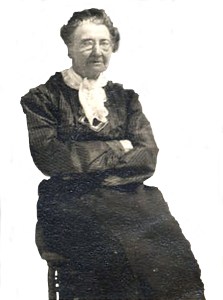
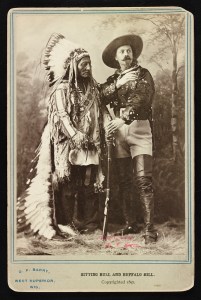
Of her life in Dakota with Sitting Bull and the Sioux, she said (quoted in Woman Walking Ahead),

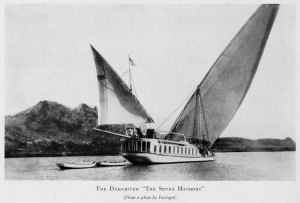

In 1907 William Wells wrote a short biography of her for Sunday School children, saying that her journeys were “done solely out of love to the cause….of exploring Africa and carrying intelligence to the poor [natives], and doing what lay in her power to abolish …the infernal slave-trade.” Of course, Alexine was appalled at the slave trade and she did her best to free some slaves to set them free, but he exaggerates. In addition, he says that she “seemed to have no love for fashionable and courtly society.” Really!?
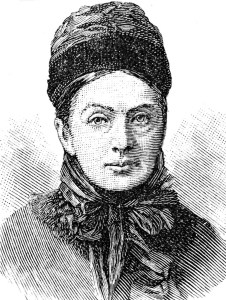


Pat Barr, who recounts this story in A Curious Life for a Lady, suggests that Isabella had a strong sense of self-preservation and her Victorian upbringing wouldn’t let her tie herself permanently to the man she called her “dear ragamuffin desperado.”
Josefina (Joey) Guerrero was a true heroine and a woman of immense courage. Not only did she risk death by spying for the Americans in the Philippines during World War II, but she had to live much of her life as a leper. Her story doesn’t even rate an entry in Wikipedia, but it’s inspiring and she deserves the recognition she has begun to receive from a new book about her called The Leper Spy.


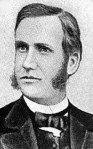
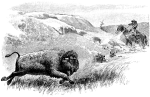

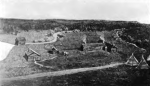


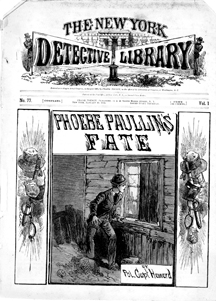
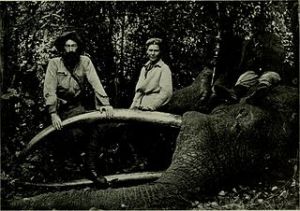
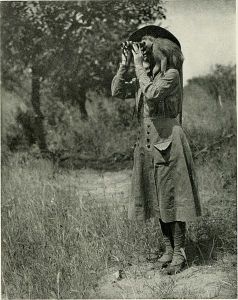
By 1924, Delia, now 55, was ready to go back to Africa alone. She had a commission to send back some large animal specimens for the Brooklyn Museum of Natural History; when that task was completed she headed for the Congo. In Jungle Portraits, she writes of her experiences in finding and living with a Pygmy tribe. I found this the most fascinating part of her story and I want to focus on it here.
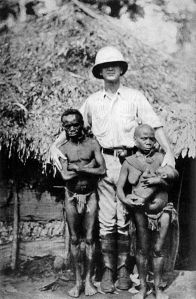
You can get more details about Delia and her adventures in Women Explorers in Africa, which also includes information about Christina Dodwell, Mary Kingsley, Florence Baker, and Alexandrine Tinne.

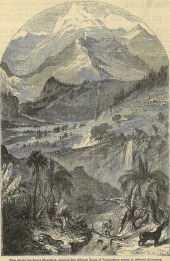

 Isabel walked, staggered, and stumbled on, deranged and distraught, for maybe a week (no way to know), with no set destination, until she met some Indians, including two women. They gave her food and nursed her until she was able to go on to a Jesuit mission. After resting a while, she was able to go to the boat that was waiting and go downriver in a “triumphal procession.” In a tearful reunion, he called her “my cherished wife.” This was July 1770, ten months from the start of her journey.


Travels in West Africa: Mary’s Controversial Narrative
Katherine Franks’ biography, A Voyager Out, is an excellent book. She provides more background into Kingsley’s childhood and her essential loneliness, as well as her strong opinions and endearing personality.
I also enjoyed the Caroline Alexander book One Dry Season mentioned above. She shows how little has changed in these parts of the world since the time when Mary Kingsley traveled and she puts Mary’s courage and determination into a new perspective.


 She would go to concerts with the colonel’s wife and sit with Nazi officers and their wives. She thought about sitting there with them not knowing she was Jewish. They couldn’t tell!
 Of her life in Dakota with Sitting Bull and the Sioux, she said (quoted in Woman Walking Ahead),

 In 1907 William Wells wrote a short biography of her for Sunday School children, saying that her journeys were “done solely out of love to the cause….of exploring Africa and carrying intelligence to the poor [natives], and doing what lay in her power to abolish …the infernal slave-trade.” Of course, Alexine was appalled at the slave trade and she did her best to free some slaves to set them free, but he exaggerates. In addition, he says that she “seemed to have no love for fashionable and courtly society.” Really!?


 Pat Barr, who recounts this story in
 Josefina (Joey) Guerrero was a true heroine and a woman of immense courage. Not only did she risk death by spying for the Americans in the Philippines during World War II, but she had to live much of her life as a leper. Her story doesn’t even rate an entry in Wikipedia, but it’s inspiring and she deserves the recognition she has begun to receive from a new book about her called
  By 1924, Delia, now 55, was ready to go back to Africa alone. She had a commission to send back some large animal specimens for the Brooklyn Museum of Natural History; when that task was completed she headed for the Congo. In Jungle Portraits, she writes of her experiences in finding and living with a Pygmy tribe. I found this the most fascinating part of her story and I want to focus on it here.
 You can get more details about Delia and her adventures in Women Explorers in Africa, which also includes information about Christina Dodwell,


 Travels in West Africa: Mary’s Controversial Narrative
 Katherine Franks’ biography, A Voyager Out, is an excellent book. She provides more background into Kingsley’s childhood and her essential loneliness, as well as her strong opinions and endearing personality.
 I also enjoyed the Caroline Alexander book One Dry Season mentioned above. She shows how little has changed in these parts of the world since the time when Mary Kingsley traveled and she puts Mary’s courage and determination into a new perspective.
